Quick answer: Most leather couches benefit from a professional clean and condition every 6 to 12 months, and more often with heavy use, pets, kids or strong sun. A professional clean uses a pH-balanced leather cleaner to lift body oil and grime from the grain, then a conditioner to keep the leather supple. Never use steam, household sprays or baby wipes on leather.
Leather has a reputation for being easy care, and day to day it is. Spills wipe off and pet hair does not cling. But leather is a natural hide, and it slowly absorbs body oils, sweat, dust and skin creams. Left alone, that build-up darkens the seats, and the leather gradually dries out. Regular leather couch cleaning in Melbourne keeps it looking and feeling the way it did when you bought it.
Why does a leather couch need cleaning and conditioning?
Cleaning and conditioning do two different jobs. Cleaning removes the dirt and oils that sit on and in the surface of the leather. Conditioning replaces moisture and helps keep the hide flexible.
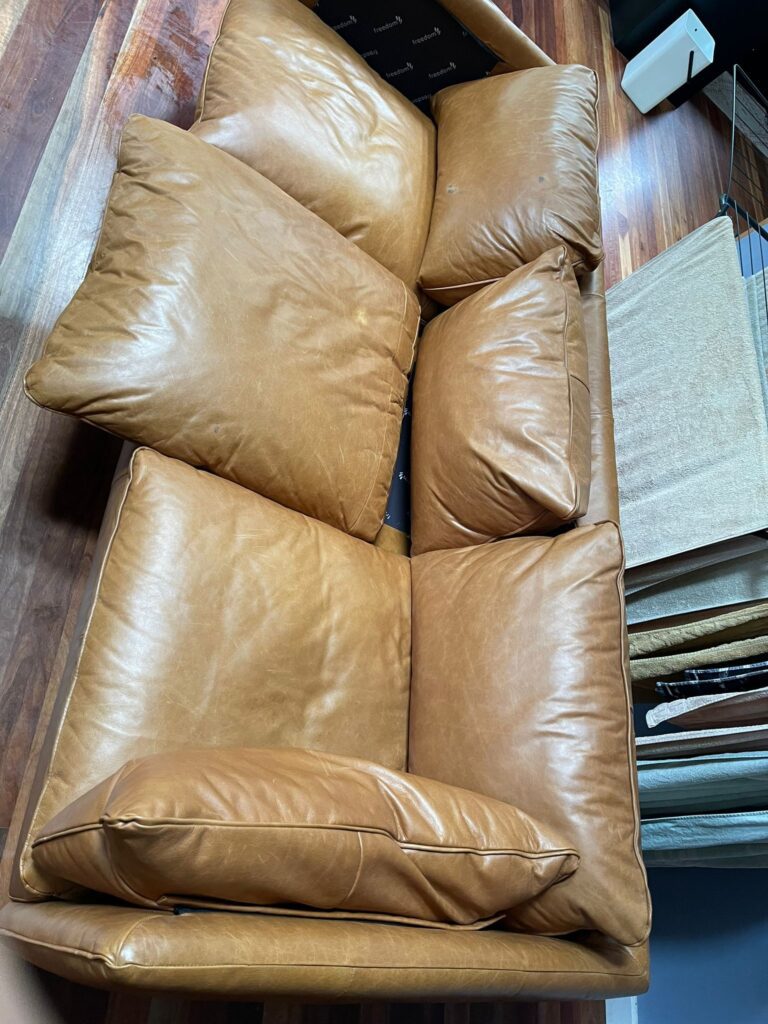
Without cleaning, body oil builds up on headrests, armrests and seat cushions, turning them darker and sometimes shiny or sticky. Without conditioning, leather loses suppleness, especially near heaters, split systems and sunny windows, and over time it can start to crease, crack and fade. We go into the causes in detail in why leather sofas crack, fade and go sticky.
How often should you clean and condition a leather couch?
There is no single schedule that suits every lounge, but these are practical guidelines:
| Household | Professional clean and condition | Home care |
|---|---|---|
| Light use, adults only | Every 12 months | Dust weekly, wipe spills straight away |
| Daily use, family lounge | Every 6 to 12 months | Weekly dust, monthly gentle wipe |
| Pets or young children | Every 6 months | Wipe drool, food and paw marks promptly |
| Near a window, heater or split system | Every 6 months | Move or shade if possible |
| Light-coloured leather | Every 6 months | Watch for dye transfer from clothing |
Signs it is due sooner include darkened headrests, a sticky or tacky feel, a dull or dry look, and leather that feels stiff rather than soft.
What type of leather is your couch?
The type of leather decides how it can be cleaned, which is why a professional starts with an inspection and test.
- Pigmented or protected leather. The most common type on family lounges. It has a coloured protective coating, which makes it more resistant to spills and generally easier to clean.
- Aniline leather. Dyed but with little or no surface coating, so it feels very soft and natural. It absorbs liquids and oils quickly and darkens readily. It needs a gentle approach.
- Semi-aniline leather. A middle ground with a light protective coating.
- Nubuck and suede. Buffed or brushed leathers with a velvety texture, very sensitive to moisture and oils.
A quick home check: put a tiny drop of water on a hidden area. If it darkens and soaks in quickly, the leather is probably aniline or similar and needs extra care. If it beads up, it is likely protected leather.
What is involved in a professional leather clean?
Our leather cleaning follows the same three-stage process as all our jobs: inspect and test, treat and clean, then a walk-through with you.
- Inspection. The technician identifies the leather type, checks for wear, scratches, cracks and dye transfer, and points out anything that cleaning will not fix.
- Test. The cleaner is tested on a hidden area to make sure the finish and colour react well.
- Dry soil removal. Seams, creases and crevices are vacuumed so grit does not scratch the surface during cleaning.
- pH-balanced clean. A leather-specific cleaner is worked into the grain with soft brushes and cloths, paying extra attention to headrests, arms and seat fronts where body oil builds up.
- Conditioning. A leather conditioner is applied evenly and buffed so the leather feels supple rather than greasy.
Leather does not need long drying times like fabric, so the couch is usually ready to use soon after the clean.
What should you never use on a leather couch?
Many leather problems are caused by well-meaning home cleaning. Avoid:
- Steam cleaners. Heat and moisture can shrink, stiffen and discolour leather.
- Baby wipes and multipurpose sprays. They often contain alcohol or detergents that strip the finish over time.
- Vinegar, dishwashing liquid and bicarb. Common DIY suggestions that can dry out or damage leather.
- Furniture polish and silicone sprays. They leave a slippery residue that attracts dirt.
- Too much conditioner. Over-conditioning can leave leather tacky and attract soil.
Pro tip: for everyday care, a soft dry microfibre cloth for dust and a barely damp cloth for fresh spills is all most protected leather needs. Save cleaners and conditioners for proper leather products.
What can and can’t a leather clean fix?
A professional clean and condition usually improves darkened headrests and arms, general grime, a dull appearance, stiffness from dryness and many fresh marks. It cannot repair physical damage. Deep cracks, peeled or worn-through finish, cat scratches, tears and sun-faded colour will still be there after cleaning, although the leather may look and feel better overall.
Ink and denim dye are a special case. Some come out, some lighten and some do not, depending on the leather type and how long the mark has been there. Our guide to ink, denim dye and pen marks on a leather couch explains what to expect.
Should leather and fabric furniture be cleaned at the same time?
Many homes have a leather lounge alongside fabric chairs, ottomans or a modular. Doing everything in one visit is convenient and qualifies for bundle discounts. Fabric pieces get a fabric test and suitable method through our fabric couch cleaning service, while leather gets a pH-balanced clean and conditioning. If you are weighing up the value of a professional clean, see whether professional couch cleaning is worth it.
Booking leather couch cleaning in Melbourne
FreshBreeze cleans and conditions leather lounges, recliners and armchairs across Melbourne, including Toorak, South Yarra, Brighton and the bayside suburbs. We use products that are safe for kids and pets and back the job with our free re-clean guarantee.
To book professional leather couch cleaning and conditioning, text a photo of your lounge and your suburb to 0485 522 533 or call (03) 7067 9244. We confirm a fixed price before starting, and you can see how pricing works on our pricing page.