Quick answer: Yes, a professional clean helps reduce dust mites and their allergens, mainly through a thorough HEPA vacuum that captures mite debris, skin flakes and dust instead of blowing it back into the room. It does not eliminate mites permanently, and it is not a medical treatment. The best results come from combining a periodic professional clean with a mite-resistant protector, hot-washed bedding and a drier bedroom.
If you wake up congested, sneeze when you make the bed, or have a child with allergies, the mattress is an obvious suspect. Dust mites live in every Melbourne home to some degree, and bedding gives them almost everything they need. This guide explains what professional mattress cleaning in Melbourne can realistically do about them, and what people mean when they search for mattress dry cleaning.
What are dust mites and why do they live in mattresses?
Dust mites are microscopic relatives of spiders. They feed on the skin flakes people shed every day and thrive in warm, humid places. A mattress offers both: body heat and the moisture we lose overnight through breath and sweat, plus a steady supply of skin.
For people with dust mite allergy, the trigger is mostly the allergen found in mite droppings and body fragments, which builds up in mattresses, pillows, carpets and soft furnishings. That is why cleaning focuses on removing debris, not just the mites themselves.
Melbourne homes add their own factor. In winter, bedrooms are often closed up, heated and damp from condensation, which suits mites well. Airing a room is easier in summer, but that is also when pollen joins the mix for many allergy sufferers.
What is mattress dry cleaning?
Mattress dry cleaning is a common search term rather than a single defined method. It usually refers to a low-moisture clean, as opposed to soaking a mattress with water. That matters because mattresses are thick and slow to dry, and a mattress left damp can encourage the same humidity that mites and mould like.
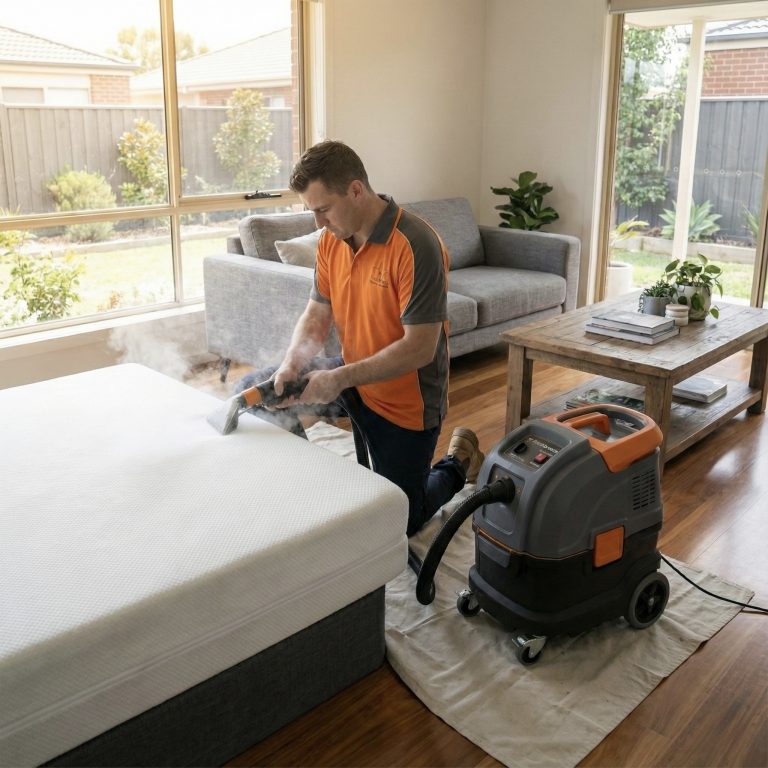
Our mattress clean is built around a dry step and a controlled-moisture step:
- HEPA vacuum. The key step for dust mites. A HEPA filter captures fine particles such as mite debris and skin flakes, so they are removed from the mattress rather than recirculated into the bedroom air.
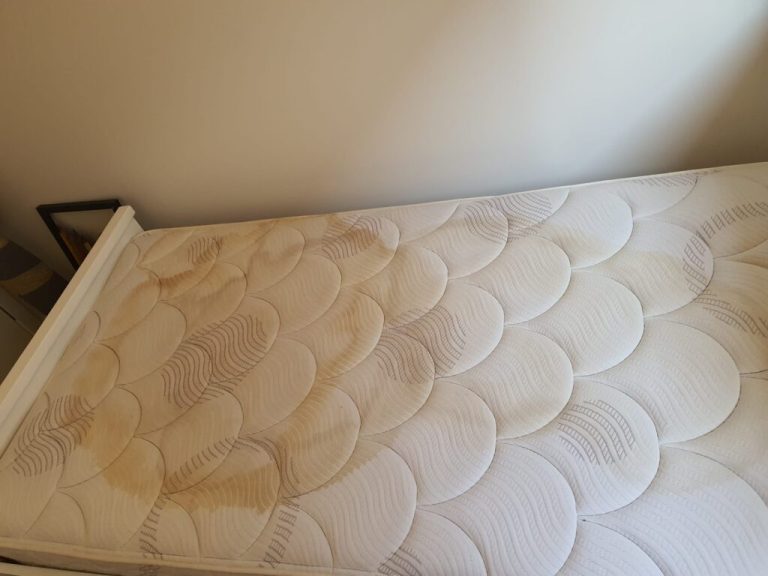
- Targeted treatment. Sweat, stains and urine get treatment that suits each, using controlled moisture rather than soaking the mattress.
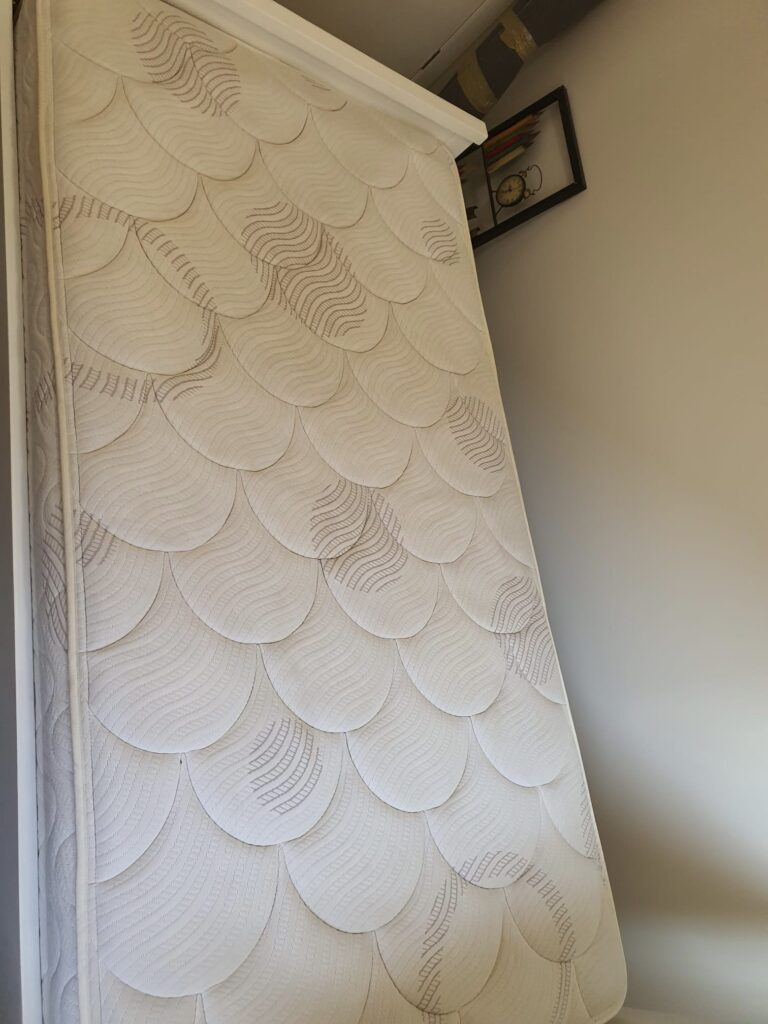
- Both sides on request. Useful when the mattress is flipped, or when the underside is dusty.
Does professional cleaning actually reduce dust mites?
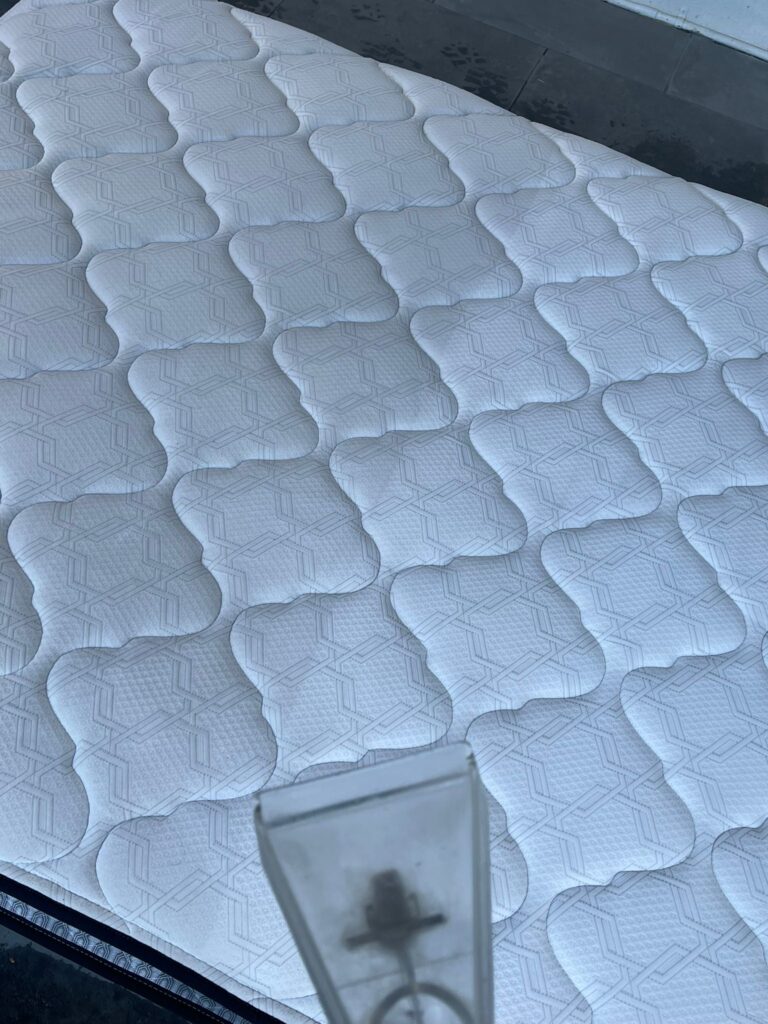
It reduces the load, which is what most households are after. A thorough HEPA vacuum removes much of the debris and dust that has accumulated on and just below the surface, along seams and in quilting. Treating sweat and stains also removes some of the moisture and organic matter mites rely on.
What it does not do is make a mattress permanently mite-free. Mites live deeper in the filling than any cleaning method fully reaches, and new skin flakes arrive every night. Expect a fresher mattress with less dust and debris, not a sterile one.
| Approach | What it does | Limits |
|---|---|---|
| Home vacuum without HEPA filter | Lifts some surface dust | Fine particles can pass back out into the room |
| Professional HEPA vacuum and treatment | Removes much of the surface and seam debris, treats stains and sweat | Reduces, does not eliminate; repeat periodically |
| Mite-resistant mattress encasement | Creates a barrier between you and the mattress | Needs washing; works best on a clean mattress |
| Hot-washing bedding | Removes allergen from sheets and pillowcases | Does nothing for the mattress itself |
Is it worth it if someone has allergies or asthma?
It can be a useful part of reducing allergens in the bedroom, but it is not a treatment for allergy or asthma. Anyone with symptoms should get advice from their GP or an allergy specialist, who can confirm what the trigger actually is. If dust mites are the problem, a doctor will usually suggest a combination of measures, and a clean mattress is a reasonable starting point for the others.
The mattress is also only one source. Carpet and fabric couches collect the same allergens. Our guide to carpet cleaning for allergies and asthma covers the rest of the house, and many households book carpet steam cleaning for the bedrooms on the same visit.
Pillows deserve a mention too. They sit closest to your face and collect the same mix of skin, sweat and mite debris. Most can be washed according to their care label, and old, flattened pillows are often cheaper to replace than to clean.
How can you keep dust mites down between cleans?
- Use a mite-resistant mattress encasement and pillow protectors, and wash them as directed.
- Wash sheets and pillowcases weekly in hot water, following the care label.
- Air the bed each morning. Pull the covers back for a while so overnight moisture can escape before you make it.
- Keep the bedroom drier. Ventilate on dry days and deal with condensation on windows in winter.
- Vacuum the mattress occasionally with a HEPA-filtered vacuum and upholstery tool.
- Reduce clutter. Soft toys, stacked cushions and throws all hold dust. Wash soft toys regularly if a child is sensitive.
Clean the mattress before putting on a new mite-resistant encasement, not after. Sealing in a mattress full of debris is less effective than starting with a clean surface.
How often should a mattress be professionally cleaned?
There is no fixed schedule. Households with allergy sufferers, young children or pets on the bed tend to benefit from more regular cleaning than a single adult with a protector. A clean is also worthwhile when you move house, take over a used mattress, or notice yellowing or a stale smell. Our guide to mattress cleaning in Melbourne covers cost factors and drying time, and how often to clean carpets covers the floors in the same room.
Booking a mattress clean in Melbourne
We clean mattresses across Melbourne, including Brighton and the bayside suburbs, using eco-friendly products that are safe for kids and pets. Quotes are per mattress, and the fixed price is confirmed before work starts; see how it works on our pricing page. Book mattress cleaning with a HEPA vacuum to reduce dust and allergens. Text a photo to 0485 522 533 or call (03) 7067 9244.