Quick answer: Carpet, couches and mattresses act like filters, collecting dust, dust mite matter, pollen and pet dander. Professional hot-water extraction and HEPA vacuuming remove a large share of that build-up, which can make a home more comfortable for people with allergies or asthma. Cleaning isn’t a medical treatment and won’t cure anything, so pair it with your doctor’s advice, regular HEPA vacuuming and good ventilation.
If someone in your home sneezes every morning or reaches for an inhaler more often over winter, the soft surfaces in the house are worth a look. Carpets and upholstered furniture hold on to fine particles that hard floors let you sweep away. Regular steam cleaning in Melbourne is one practical way to reduce what’s trapped in them. Here’s what actually helps, based on how cleaning works rather than marketing claims.
Why do carpets and couches matter for allergies?
Fibres trap particles. That’s not all bad: carpet that holds dust stops some of it floating around the room. The problem is when the carpet gets saturated with build-up and every footstep or sit-down pushes particles back into the air.
Common indoor triggers that collect in soft furnishings include:
- Dust mite matter, mainly in mattresses, pillows, couches and bedroom carpet.
- Pet dander and hair, which settle deep in the pile and between couch cushions.
- Pollen, tracked in on shoes and clothes, especially during Melbourne’s spring.
- Mould spores where carpet has been damp, for example near leaking windows or after a flood.
- General fine dust, which builds up faster when heaters circulate air in winter.
What does professional cleaning actually remove?
Vacuuming at home removes loose, dry particles from the surface. A professional clean goes further in a few ways.
| What it does | Home vacuuming | Professional cleaning |
|---|---|---|
| Lifts loose surface dust | Yes | Yes, with pre-vacuum |
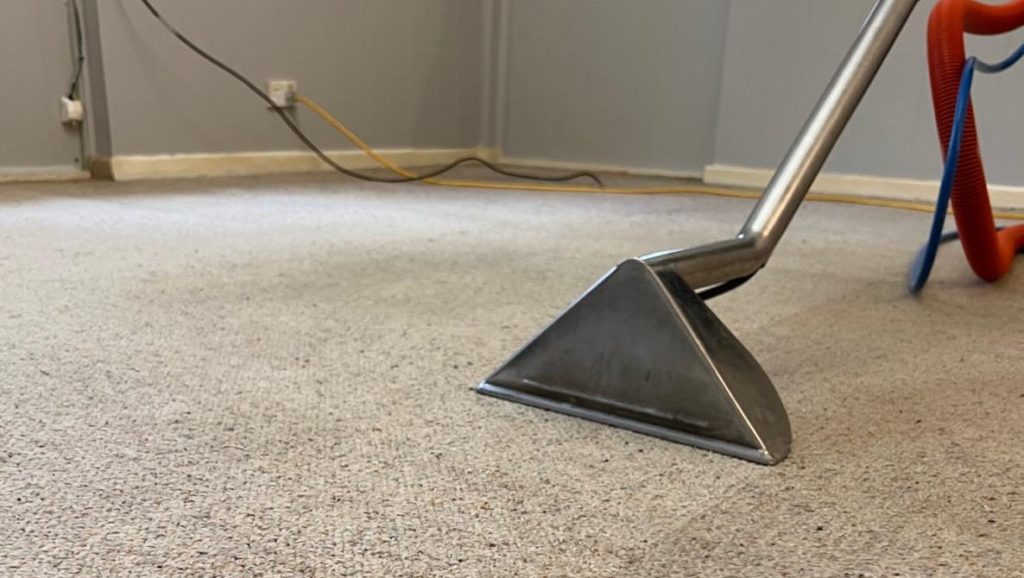
| Removes fine particles deep in the pile | Partly, with a good HEPA vacuum | Flushed out by hot-water extraction |
| Breaks down oily film holding particles | No | Yes, with pre-spray and rinse |
| Treats mattresses for dust mite matter | Limited | HEPA vacuum plus cleaning treatment |
| Removes residue from spot sprays | No | Yes, rinsed out |
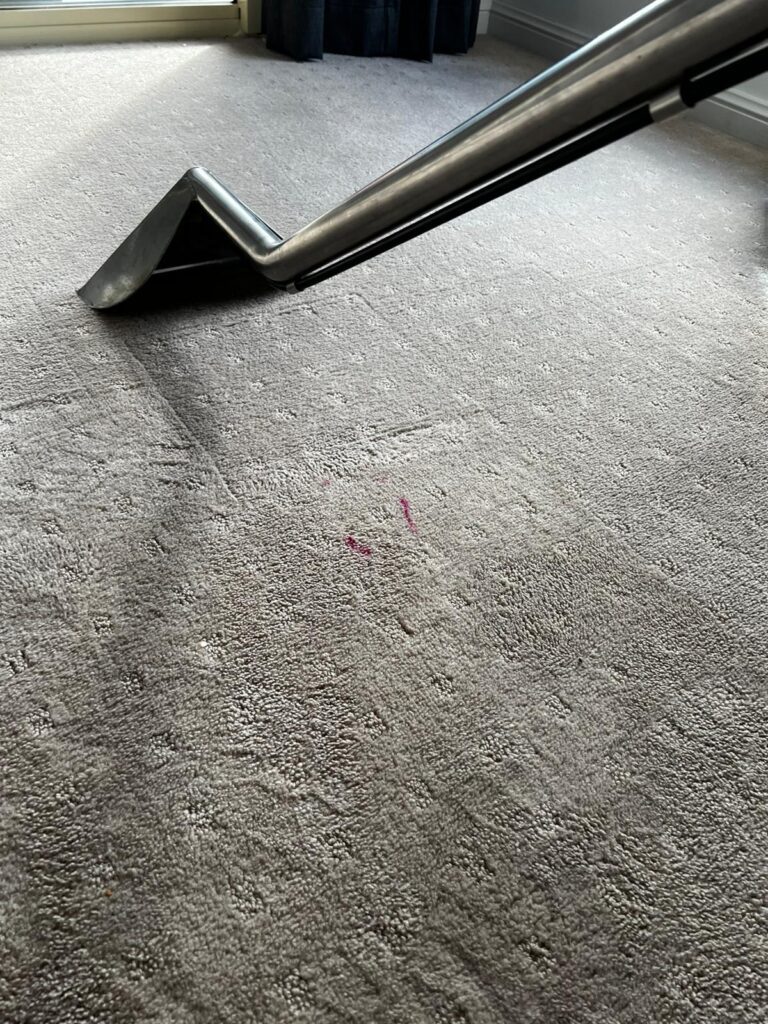
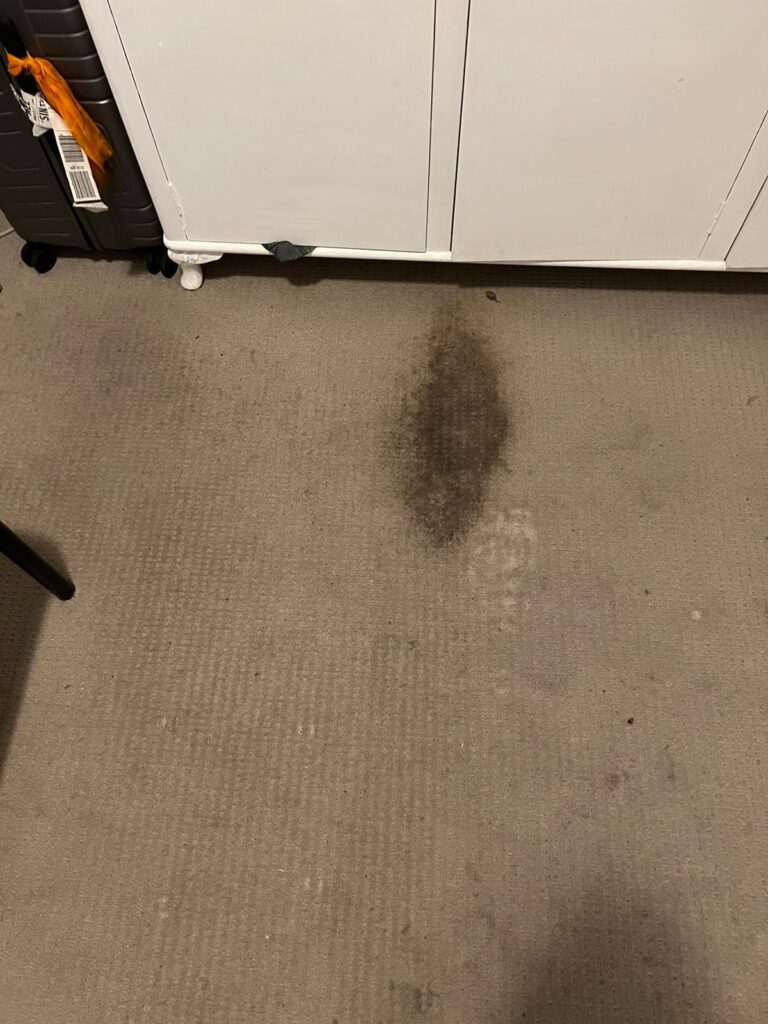
The tank of grey water at the end of a clean is a good visual reminder of how much a carpet can hold, even one that’s vacuumed regularly.
There is also the question of residue. Many household carpet shampoos and spot sprays leave a film behind, and that sticky layer holds on to dust and pollen. A proper hot-water rinse removes it, so the carpet sheds less dust when it’s walked on and stays cleaner for longer. That matters in allergy-prone homes, because the aim is not just a cleaner-looking carpet but fewer fine particles being kicked back into the air every day.
Is steam cleaning or dry cleaning better for allergies?
Both have a role. Hot-water extraction gives the deepest rinse and is usually the first choice for allergy-prone homes, because it flushes particles out rather than just loosening them. The trade-off is moisture: carpet must dry quickly, because damp carpet that stays wet can encourage mould and dust mites, which defeats the purpose.
That’s why speed-drying with air movers is part of every FreshBreeze steam clean, and why ventilation afterwards matters. In homes where drying will be slow, or for frequent maintenance between deep cleans, low-moisture carpet dry cleaning can be a good fit. Our comparison of carpet steam cleaning vs dry cleaning explains the differences.
Don’t forget the mattress and the couch
For many people with dust mite allergies, the bed is a bigger factor than the carpet. You spend hours every night with your face close to the mattress and pillows. FreshBreeze’s mattress cleaning uses a HEPA vacuum to reduce dust mites and allergens, plus stain, sweat and urine treatment, and both sides can be done on request. Our guide to dust mites and mattress cleaning covers what to expect.
Fabric couches collect pet dander, skin flakes and crumbs between and under the cushions. Upholstery cleaning includes a fabric test first, and removable cushions are cleaned on both sides. If you have pets, our article on pet hair in carpet and couches has practical tips.
Pro tip: if one person in the house is particularly sensitive, schedule the clean for a day they can be out for a few hours, and air the rooms well before they come back. Fresh-cleaned carpet should be dry and well ventilated before anyone spends long periods in the room.
How often should allergy-prone homes clean carpet?
A common approach is a professional clean every six to twelve months for carpet and couches, with mattresses done at least yearly. Bedrooms and the main living area usually matter most. Between professional cleans:
- Vacuum at least twice a week with a vacuum that has a HEPA filter, going slowly.
- Wash bedding weekly in hot water, following the care label.
- Keep pets off beds and, if possible, out of the bedroom.
- Use doormats and a shoes-off rule to reduce tracked-in pollen and soil.
- Ventilate, even in winter. A short daily airing reduces humidity and lets dust escape.
What are the honest limits?
Professional cleaning reduces the load of allergens held in carpets and furniture. It doesn’t remove them permanently: dust, pollen and dander start building up again from the moment you walk back in. It also isn’t a substitute for medical advice. If allergies or asthma are affecting daily life, speak to your GP. Cleaning is one part of a broader approach that may include air filtration, bedding covers and managing humidity.
We use eco-friendly products that are safe for kids and pets, and we’re happy to talk through product choices if someone in the home is sensitive to fragrance.
Getting allergy-focused cleaning in Melbourne
Book professional carpet steam cleaning on its own, or bundle carpet, couch and mattress cleaning in one visit for a discount. Every job starts with an inspection and test, includes speed-drying, and finishes with a walk-through, backed by our free re-clean guarantee. We cover Melbourne suburbs including Brighton. See how fixed quotes work on our pricing page, then text a photo and your suburb to 0485 522 533 or call (03) 7067 9244.