Quick answer: If black mould sits on the surface of sound, intact grout, a professional deep clean usually lightens or removes it, and sealing afterwards helps slow it returning. If the grout is cracked, crumbling, soft, missing or the mould has grown deep into it, cleaning will only partly help and regrouting is the better fix. In both cases, mould comes back unless the shower dries out properly between uses.
Black spots in shower grout are one of the most common bathroom complaints in Melbourne homes, particularly in winter when bathrooms stay cold and damp. Before you spend a weekend scrubbing, or book a tiler, it helps to know which problem you actually have. This guide explains how professional tile and grout cleaning in Melbourne deals with mouldy grout, and when regrouting is the honest answer.
Why does black mould grow in shower grout?
Mould needs moisture, warmth and something to feed on. A shower provides all three. Cement grout is porous, so it stays damp long after the tiles dry. Soap residue, body oils and skin cells settle into it and act as food. Add a bathroom with a weak exhaust fan or no window, and mould has ideal conditions.
Common contributing factors include:
- Exhaust fans that are too small, blocked or not switched on.
- Doors and windows kept shut after showering.
- Long, hot showers in a cold room, causing heavy condensation.
- Shower screens and corners that stay wet.
- Grout that has never been sealed, or sealer that has worn off.
- Leaking or failed silicone at corners and the base, letting water sit behind.
How do you tell whether grout can be cleaned or needs replacing?
Have a close look at the grout lines, ideally with a torch. The condition of the grout itself matters more than how dark the mould looks.
| What you see | Likely fix |
|---|---|
| Grey or black spotting on firm, intact grout | Deep clean, then consider sealing |
| Even discolouration across all grout lines | Deep clean usually improves it significantly |
| Black staining that returns within weeks of cleaning | Likely deep growth or a moisture problem; regrout and fix ventilation |
| Cracked, crumbling or sandy grout | Regrouting |
| Gaps or missing grout | Regrouting, and check for leaks |
| Mould on silicone in corners | Silicone replacement, as mould in silicone rarely cleans out |
| Loose or drummy tiles | A tiler or plumber, as water may be getting behind |
If you press a key gently along a grout line and it scratches away easily, the grout has broken down. No amount of cleaning will restore it.
What does a professional grout deep clean involve?
- Inspection: the technician checks the grout condition, silicone, tile type and any signs of water getting behind the tiles, and tells you what is realistic.
- Alkaline pre-treatment: a cleaning solution is applied to break down soap scum, body oils and soil that feed mould.
- Agitation: grout lines are brushed to loosen embedded growth and residue.
- High-pressure rotary clean and extraction: the surface is flushed and the dirty water is vacuumed away, rather than left to sit in the grout.
- Rinse and dry: residue is removed so it does not become new food for mould.
- Optional sealing: once the grout is clean and dry, sealer can slow down water and soap absorption.
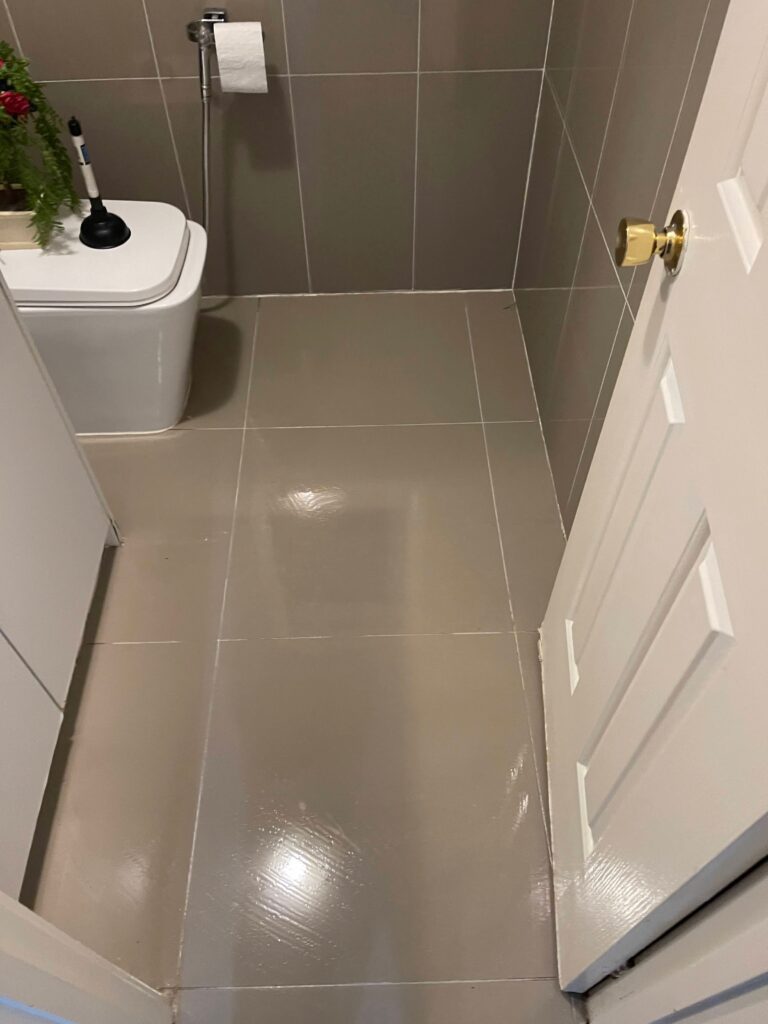
Surface mould and soap scum usually come away well. Staining that has penetrated deep into the grout may lighten without disappearing completely. You should be told this at the inspection rather than discovering it afterwards.
Is it safe to clean black mould yourself?
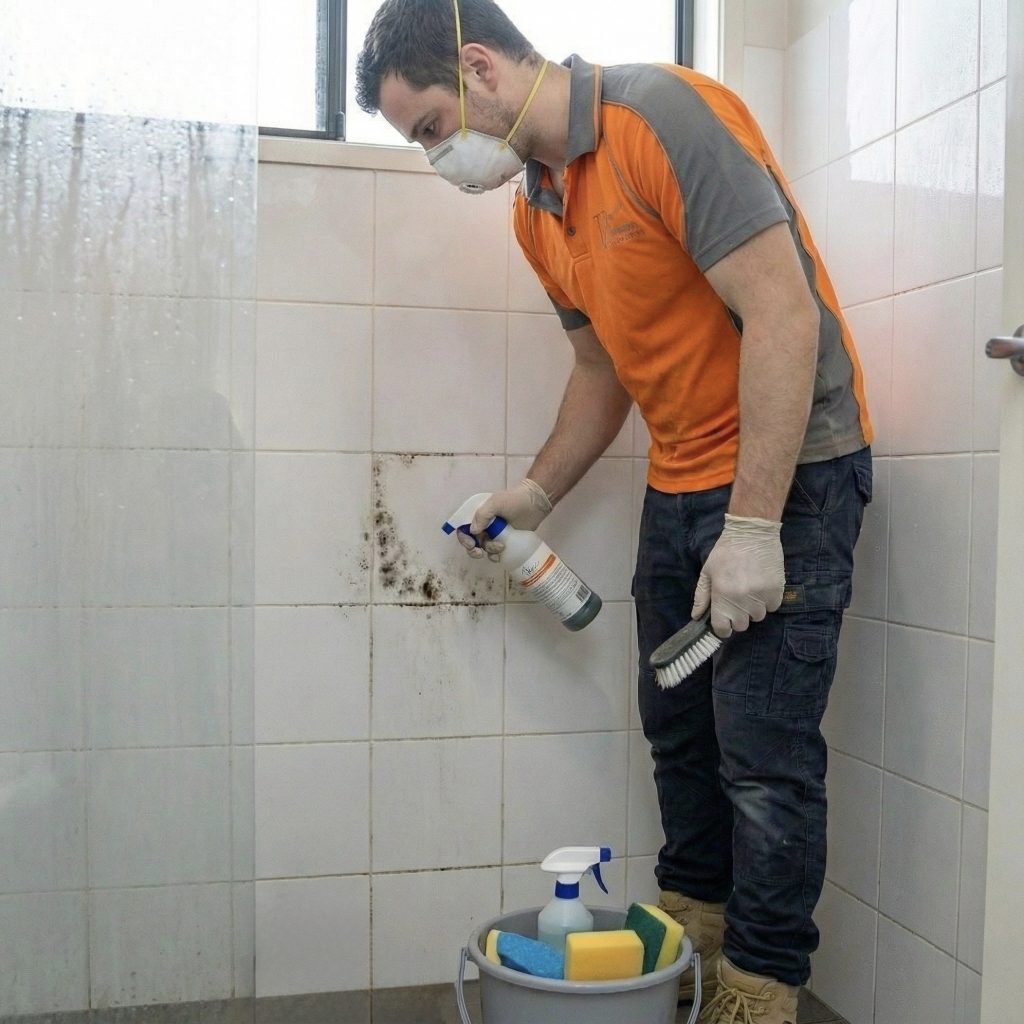
Small patches of surface mould on bathroom grout are commonly cleaned by householders. If you do it yourself, ventilate the room well, wear gloves and eye protection, and follow product labels closely. Never mix cleaning products, especially bleach with ammonia or acidic cleaners, as this can release harmful gases.
Larger areas of mould, mould on walls or ceilings, or mould that keeps returning can point to a moisture problem such as a leak or poor ventilation. People with asthma, allergies or other health concerns should seek advice from their doctor about mould exposure, and the cause of persistent dampness is best checked by a plumber or builder.
After every shower, run the exhaust fan for at least 15 to 20 minutes and squeegee the walls and screen. Getting the surfaces dry quickly does more to prevent mould than any cleaning product.
When is regrouting the better option?
Regrouting means removing the top layer of old grout and filling the joints with new grout. It is the better choice when grout is cracked, soft, missing, or so deeply stained that cleaning cannot bring it back. It is also worth considering when mould keeps returning within weeks of a thorough clean, as that often means growth has gone deep into the grout.
Regrouting is tiling work rather than cleaning, and if loose tiles or leaks are involved, a tiler or plumber should look at the cause. The good news is that sound grout with surface mould, which is the most common situation, rarely needs replacing. A deep clean and good ventilation habits are often enough.
How do you stop mould coming back?
- Run the exhaust fan during and after every shower, and clean the fan cover regularly.
- Leave the bathroom door or window open after showering when you can.
- Squeegee or wipe down walls, screens and corners.
- Clean weekly with a pH-neutral or mild bathroom cleaner to remove soap residue.
- Have grout sealed after a deep clean, and reseal when water stops beading on it.
- Replace mouldy or peeling silicone promptly.
Our guide on whether grout sealing is worth it explains how sealer helps and how long it lasts. For the rest of your home, our tile and grout cleaning guide covers kitchens, laundries and entries. Damp, cold homes can also affect soft furnishings, which we touch on in carpet and upholstery cleaning for allergies and asthma.
Getting shower grout deep cleaned in Melbourne
FreshBreeze cleans bathroom, laundry and kitchen tiles across Melbourne, including Armadale and nearby suburbs, with an alkaline pre-treatment, high-pressure rotary cleaning and extraction, and optional grout sealing. Products are eco-friendly and safe for kids and pets. You can book carpet steam cleaning on the same visit for a bundle discount.
To book mould grout cleaning in Melbourne, text a close-up photo of the grout and your suburb to 0485 522 533, or call (03) 7067 9244. You can also contact us online.