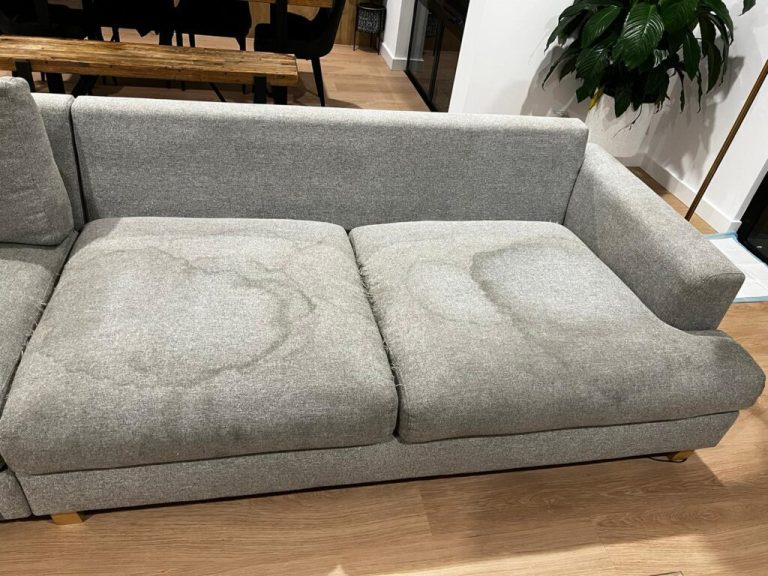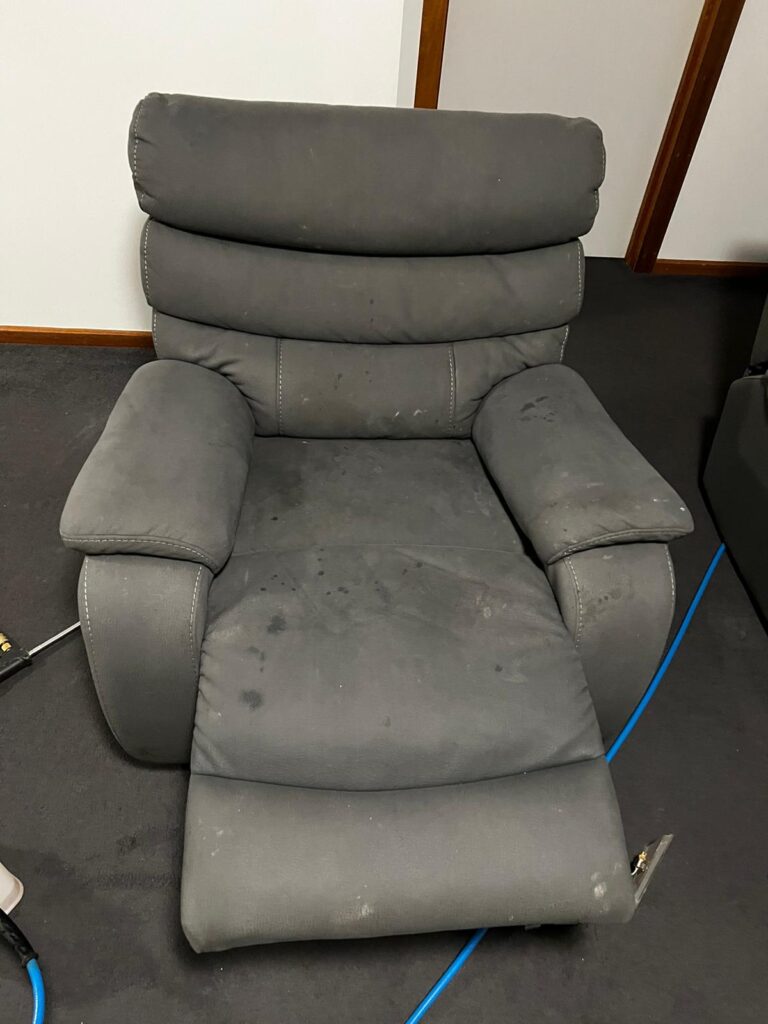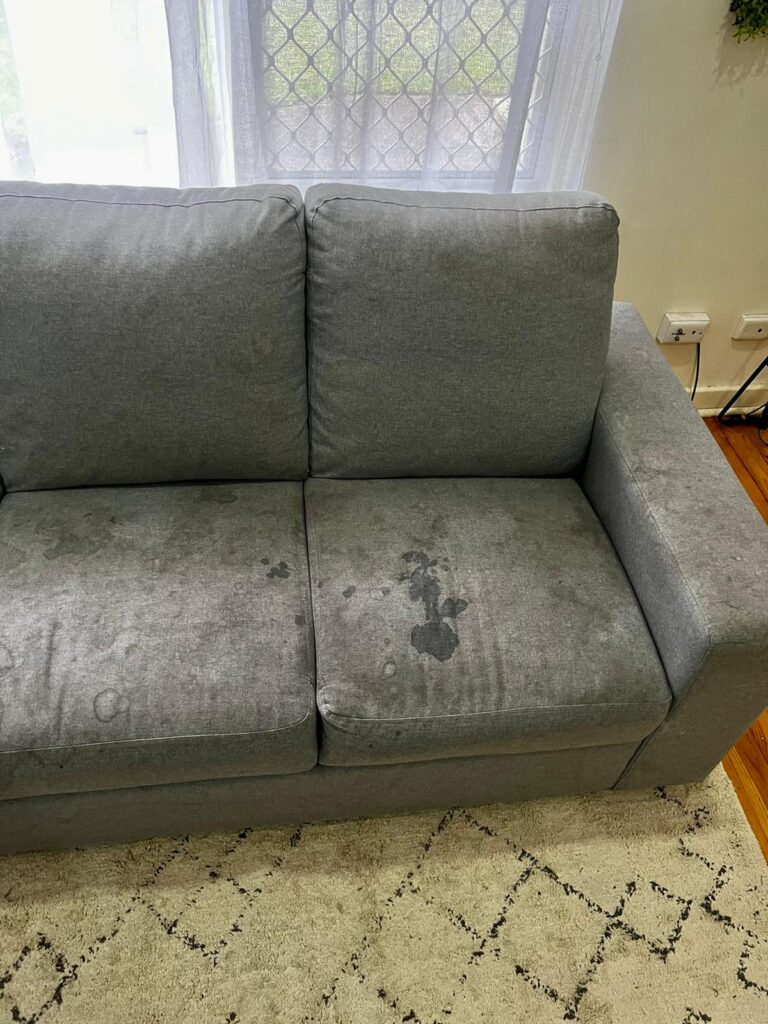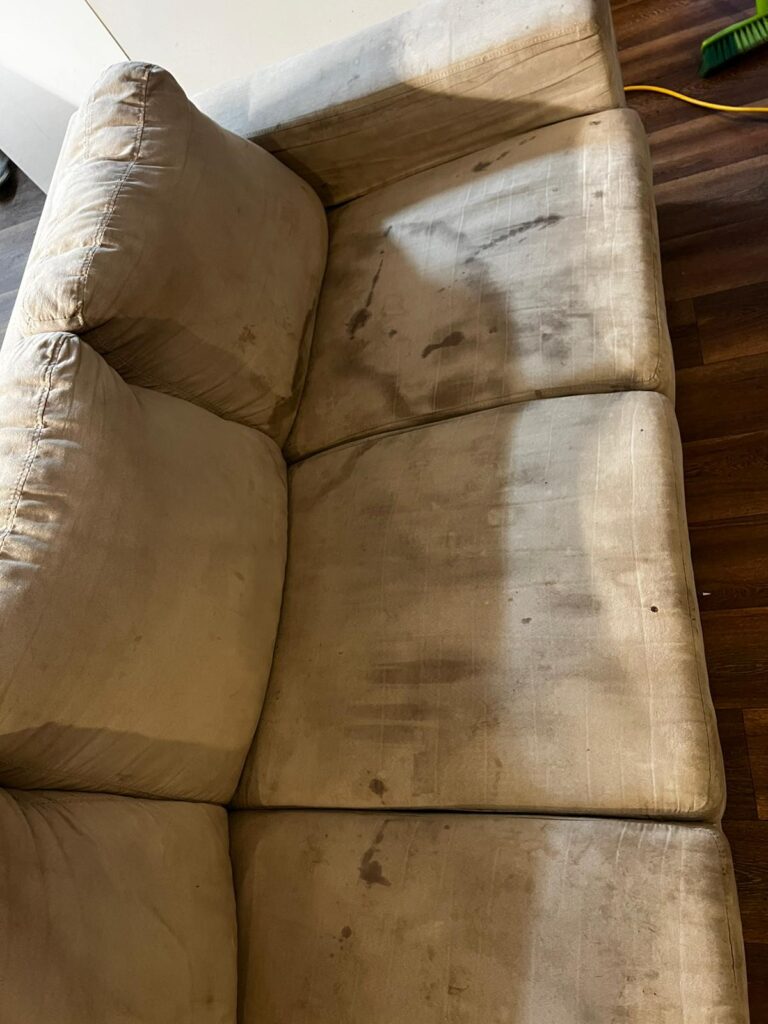
Quick answer: The dark, slightly shiny patches on sofa arms and headrests are a build-up of body oil, hair products, skin cells and dust. Water alone will not shift them because oil repels water. They need a degreasing pre-treatment worked into the fabric, followed by a thorough rinse and extraction, which is what professional upholstery steam cleaning does. Heavily worn or flattened fabric may stay slightly shiny even when clean.
Arms and headrests are where a sofa shows its age first. Even a couch that looks fine from across the room often has darkened arm fronts and a grey band where heads rest. These marks are one of the most common reasons people book upholstery steam cleaning in Melbourne, and they are also one of the most common things people make worse at home.
What causes greasy marks on sofa arms and headrests?
Every time someone rests their arm, hand or head on the couch, a little skin oil transfers to the fabric. Add moisturiser, sunscreen, hair oil, hair spray, food from fingers and the general dust in the room, and you get a sticky film. That film traps more dust, which is why the area darkens over months rather than days.
The usual hot spots:
- Top and front of the arms
- Back cushion tops and headrest areas
- The front edge of seat cushions, where legs rub
- Recliner headrests and footrests
- Corner seats on a modular, which often get the most use
If your sofa has a recliner section, our guide to recliner and lift chair cleaning covers headrest and footrest marks on those pieces specifically.
Why doesn’t wiping with water remove the marks?
Oil and water do not mix. A damp cloth glides over the oily film and spreads it around without lifting it. Worse, the water dissolves some of the loose dust and carries it outwards, leaving a ring around the arm that makes the problem more obvious. That is the same process behind water rings on couch cushions.
Strong household degreasers are not the answer either. Many are too alkaline for upholstery, can strip dye, and leave a residue that attracts dirt faster after it dries.
What can you safely try at home?
For light build-up on a fabric with a W or W/S care code, a careful approach can help. Always check the care code on the tag first: W or W/S means water-based cleaning is generally safe.
- Vacuum the area thoroughly with an upholstery brush.
- Mix a very small amount of mild dishwashing liquid with warm water.
- Dampen a white microfibre cloth, wring it out well, and work in small sections.
- Wipe with a second cloth dampened with plain water to rinse.
- Blot dry with a clean towel and let the area air dry with a fan.
Stop if colour transfers onto the cloth, the fabric changes texture, or a ring starts to form. On S-coded, X-coded or delicate fabrics, skip DIY entirely.
Work from the outside of the mark inwards and clean slightly past the edge of the dark area. Stopping exactly at the edge is what leaves a visible line.
How do professionals remove body oil from upholstery?
A professional clean treats arms and headrests as heavy-soil areas. At FreshBreeze the steps for these zones are:
- Fabric test. Checks colourfastness and how the fibres react before any product goes on.
- Dry soil removal. Vacuuming lifts loose dust so it does not turn to mud when wet.
- Targeted pre-treatment. A solution suited to oily soil is applied to the arms, headrests and seat edges and given time to break down the film.
- Gentle agitation. Working the product into the weave so it reaches the oil.
- Rinse and extraction. Hot-water extraction flushes the loosened oil out and pulls the moisture back up.
- Full-panel cleaning. The whole arm and back are cleaned, not just the dark patch, so the result is even.
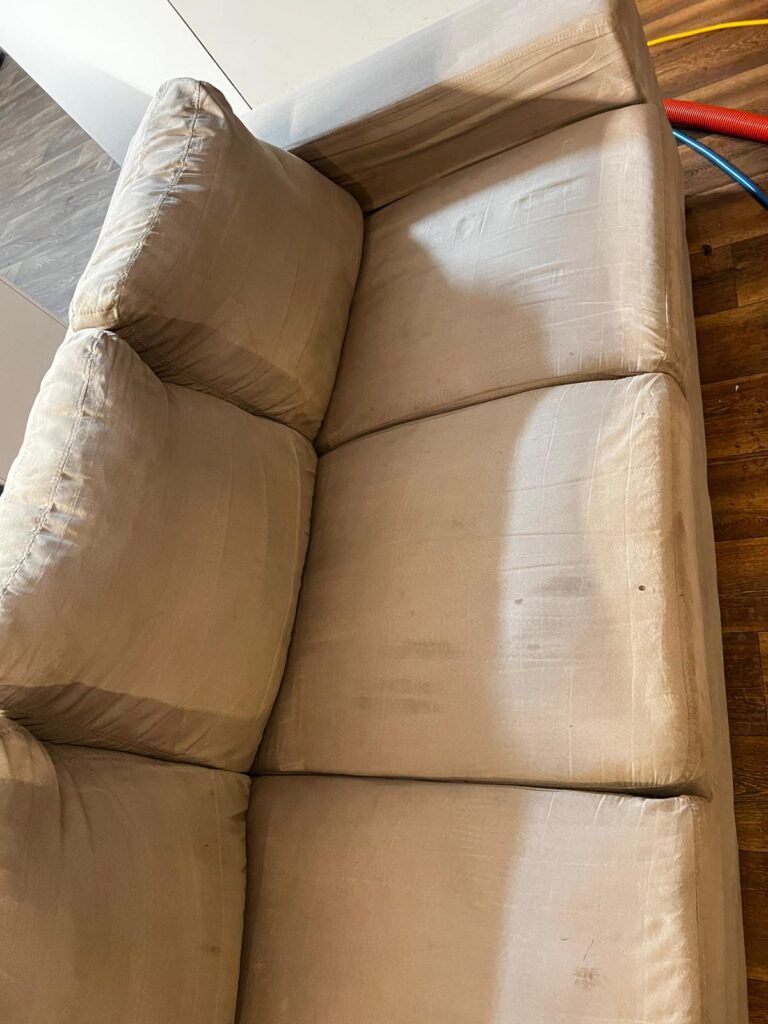
Where fabric is sensitive, a low-moisture method may be used instead. Our comparison of couch steam cleaning vs dry cleaning explains the difference.
Will the arms look completely new afterwards?
Usually the colour comes back dramatically, but there are honest limits:
| What you see | Likely result after cleaning |
|---|---|
| Dark, grey or yellowish film | Usually removed well |
| Sticky or stiff feel | Usually returns to a soft texture |
| Shiny, flattened pile | Cleaner, but the shine may remain because the fibres are worn |
| Faded colour from sun or wear | Cannot be restored by cleaning |
| Hair dye or fake tan marks | Often improves, sometimes leaves a shadow |
FreshBreeze points out these limits during the inspection, before any work starts. If something does not come up as it should, the free re-clean guarantee covers a second pass.
How do you stop greasy arms coming back so fast?
- Use washable arm covers or a throw on the arms and headrest area.
- Vacuum the arms and back cushions every week or two, not just the seats.
- Avoid sitting with freshly applied moisturiser, sunscreen or wet hair against the fabric.
- Wipe spills promptly by blotting.
- Book a professional clean before the build-up gets heavy. Light soil comes out more easily and more completely.
How often you need a clean depends on how the couch is used. A family sofa with kids and pets needs more frequent attention than a formal lounge. If you are deciding whether it is worth booking at all, read is professional couch cleaning worth it.
What about leather sofas with greasy headrests?
Leather shows body oil differently, often as dark, slightly sticky patches on the headrest and arms. Over time those oils can dry the leather out and contribute to cracking. Leather needs a pH-balanced clean followed by conditioning rather than fabric cleaning methods. See leather couch cleaning and conditioning.
Getting your sofa arms and headrests cleaned in Melbourne
Send a daylight photo of the whole couch, a close-up of the worst arm, and your suburb. FreshBreeze will quote a fixed per-seat price before starting, test the fabric on the day, and give arms and headrests the extra pre-treatment they need. Products are eco-friendly and safe for kids and pets.
To book professional upholstery steam cleaning in Armadale or anywhere across Melbourne, text a photo to 0485 522 533 or call (03) 7067 9244. See how jobs are quoted on the pricing page.