Quick answer: Most fabric couches with a W or W/S care code get the best result from steam cleaning (hot-water extraction), because it flushes body oil, dust and spills out of the fibres. Delicate, S-coded or water-sensitive fabrics are safer with a low-moisture or solvent-based clean. A fabric test before cleaning is what should decide the method, not the price or the cleaner’s habit.
When you look into couch steam cleaning in Melbourne, you will quickly see companies offering dry cleaning as well, sometimes as a quicker option. The two are not interchangeable. Each suits different fabrics and different kinds of dirt, and choosing the wrong one is behind most of the bad outcomes people describe: water rings, shrinking covers, or a couch that looks only slightly better.
What is couch steam cleaning, really?
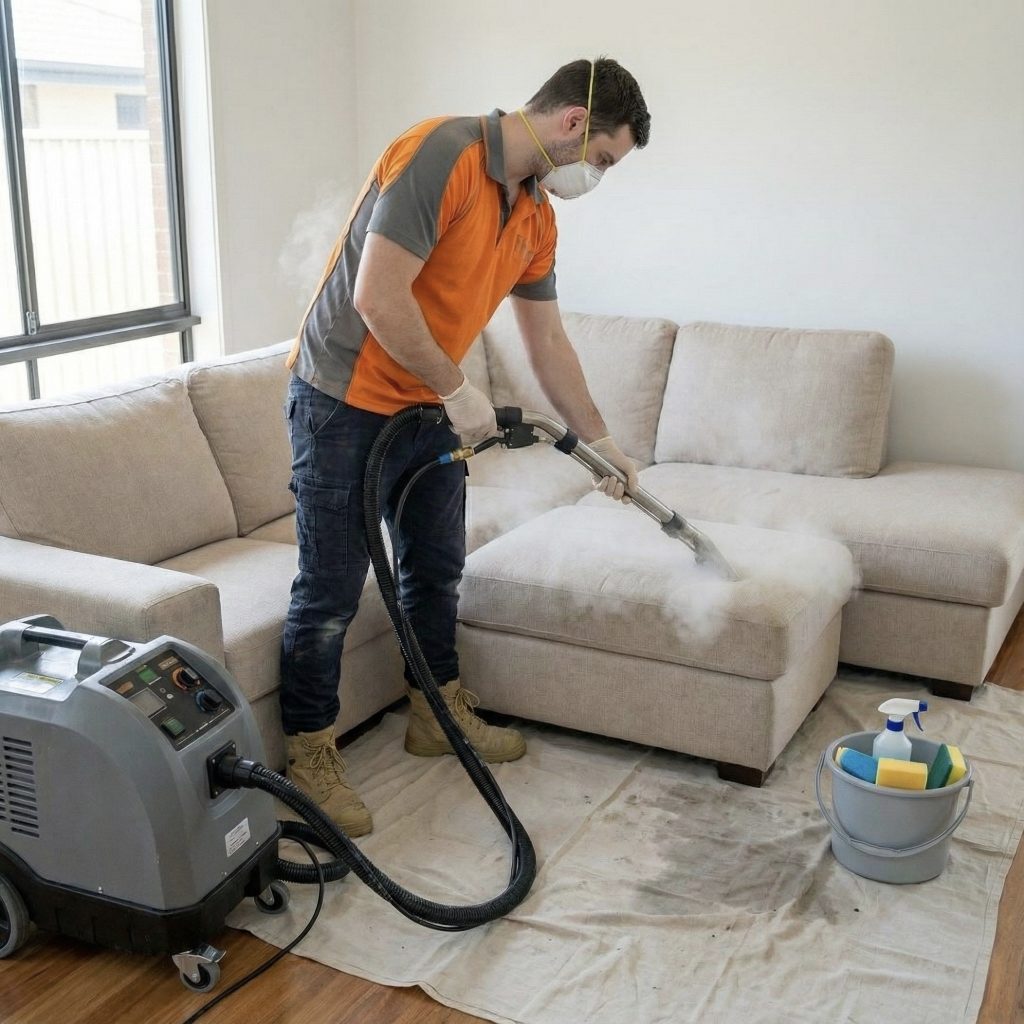
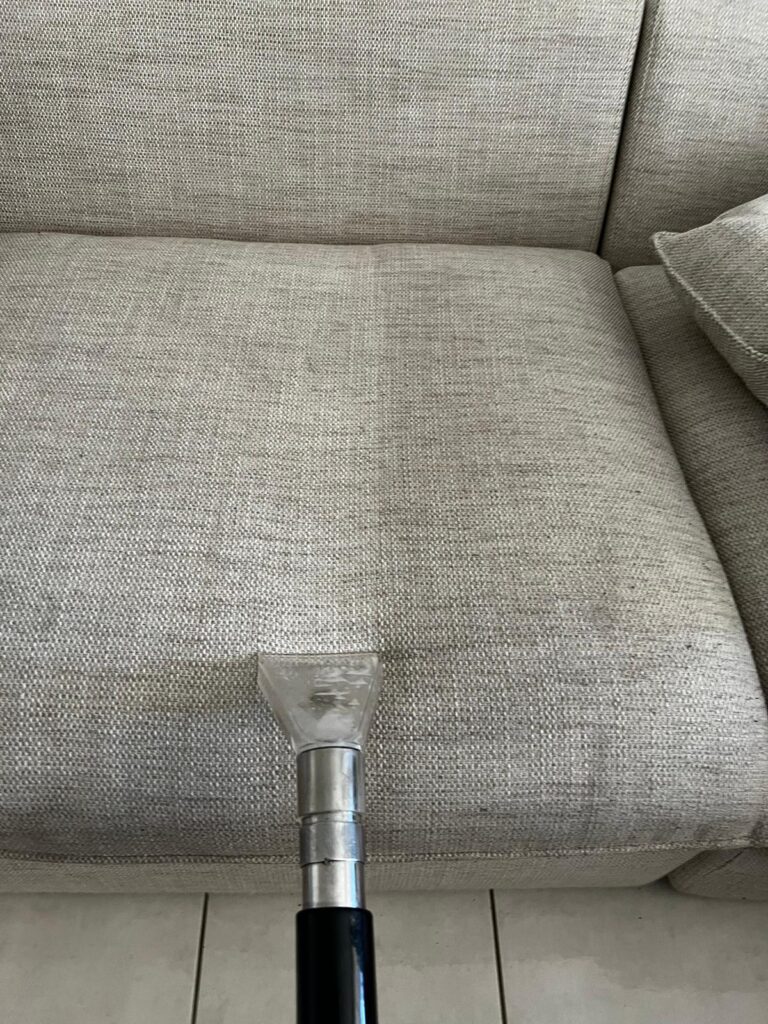
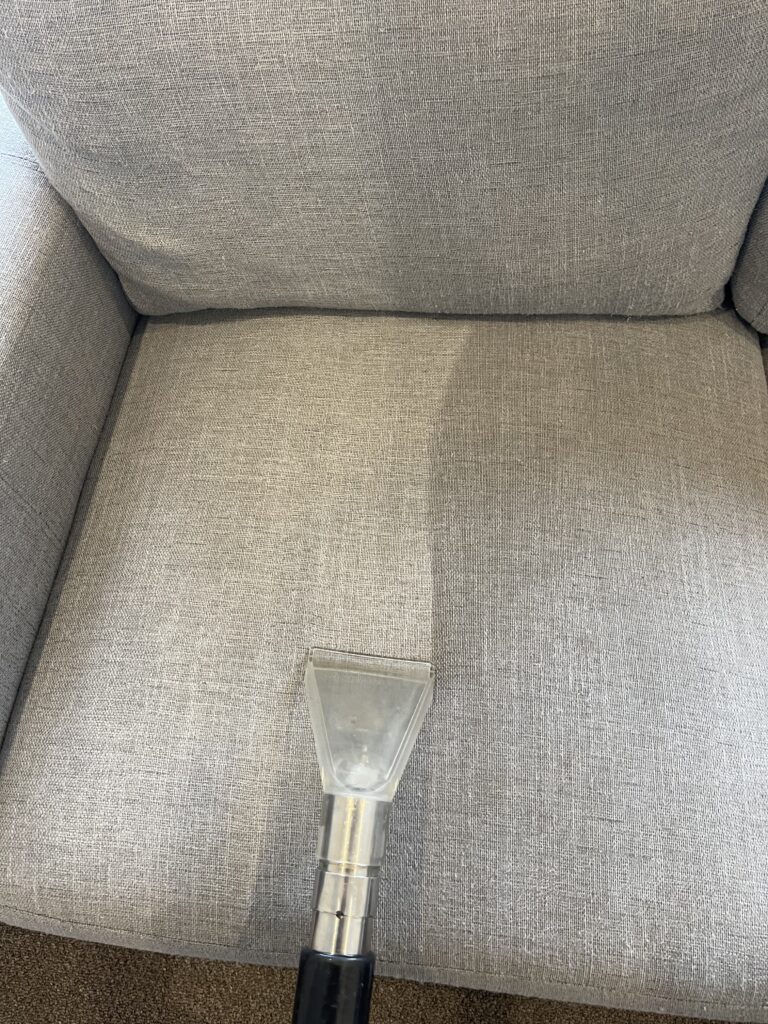
Steam cleaning is the common name for hot-water extraction. The technician pre-sprays soiled areas, works the solution into the fabric, then uses an upholstery tool that rinses with hot water and immediately vacuums it back out. Very little actual steam is involved. The key part is the extraction: the dirty water comes out rather than soaking into the foam.
Done well, it is the most thorough clean available for fabric upholstery. It removes what sits deep in the weave, not just what is on the surface, which is why it is the standard for most family sofas.
What does dry cleaning a couch mean?
Dry cleaning does not mean no liquid at all. It usually means one of two things:
- Low-moisture cleaning: a small amount of cleaning solution is applied and agitated, and the soil is lifted with pads or a light extraction. The fabric is only slightly damp.
- Solvent cleaning: a water-free solvent is used on fabrics that react badly to water, such as some viscose blends and fabrics with an S code.
Both approaches dry faster and carry less risk on sensitive fabrics. The trade-off is that they do not flush out as much deep soil, so a heavily used couch may not come up as bright.
Steam vs dry cleaning: how do they compare?
| Steam cleaning (hot-water extraction) | Dry / low-moisture cleaning | |
|---|---|---|
| Best for | Durable fabrics, family sofas, heavy soiling, spills and odours | Delicate or water-sensitive fabrics, light maintenance cleans |
| Depth of clean | Deepest, rinses soil out of the fibres | Mainly surface and upper fibres |
| Moisture left | Damp, extracted thoroughly | Slightly damp to dry |
| Typical drying | A few hours to most of a day, depending on airflow | Usually faster |
| Risks if misused | Water rings, browning or shrinkage on unsuitable fabric | Residue and less improvement on heavy soil |
| Pet urine | Better suited, combined with enzyme treatment | Limited for soaked-in accidents |
Which fabrics should never be steam cleaned?
Check the care tag under the cushions or on the base. Fabrics coded S are meant for solvent cleaning only, and X means vacuum only, with no wet or solvent cleaning. Our guide to upholstery cleaning codes explains each one and what to do if the tag is missing.
Beyond the tag, a few fabrics deserve caution even if the label is vague: viscose and rayon blends, silk, some linen and cotton mixes that can shrink, and velvets with a crushed pile. Microfibre and suede-look sofas are a special case, covered in our post on microfibre and suede sofa cleaning.
Leather is a different category entirely. It needs a pH-balanced clean and conditioning rather than either method above, so book leather couch cleaning for leather lounges.
Why the fabric test matters more than the method
A professional should test the fabric in a hidden spot before committing to a method. That test checks whether the dye runs, whether the fibres react to water or heat, and how the soil responds. FreshBreeze runs a fabric test first on every couch, then chooses how to clean based on the result.
This is also where honest limits come in. Some marks are not dirt. Sun fade, bleach spots, dye loss and worn or shiny areas will not be fixed by any cleaning method. A good technician tells you that before they start.
Which method should you choose for your couch?
As a rule of thumb:
- Everyday fabric sofa with W or W/S code: steam cleaning for the deepest result.
- Pet accidents or strong odour: steam cleaning with enzyme treatment. See our guide to dog or cat urine on the couch.
- S-coded or delicate fabric: low-moisture or solvent cleaning.
- Light refresh between deep cleans: low-moisture is often enough.
- Need it usable within the hour: ask about low-moisture, but accept it may not lift heavy soiling.
If a cleaner quotes the same method for every couch without asking about the fabric or looking at the tag, ask why. The right method depends on what the couch is made of.
How long does each method take to dry in Melbourne?
Drying depends on airflow, temperature and humidity as much as method. A properly extracted steam clean usually leaves the fabric damp rather than wet. In a Melbourne winter with windows shut, drying is slower than on a mild spring day with a breeze through the house. Running a heater or split system and a fan helps a lot.
Low-moisture cleans dry faster because less liquid goes in. For practical timings and how to speed things up, read how long a couch takes to dry after steam cleaning.
Getting your couch cleaned in Melbourne
You do not need to pick the method yourself. Tell us the fabric if you know it, send a photo of the couch and the care tag, and mention any stains or pet accidents. FreshBreeze will test the fabric on the day and use the method that suits it, with a fixed price confirmed before work starts and a free re-clean guarantee if any area is not right.
To book professional couch and upholstery cleaning anywhere in Melbourne, from South Yarra to the bayside suburbs, text a photo to 0485 522 533 or call (03) 7067 9244. You can also send details through the contact page.