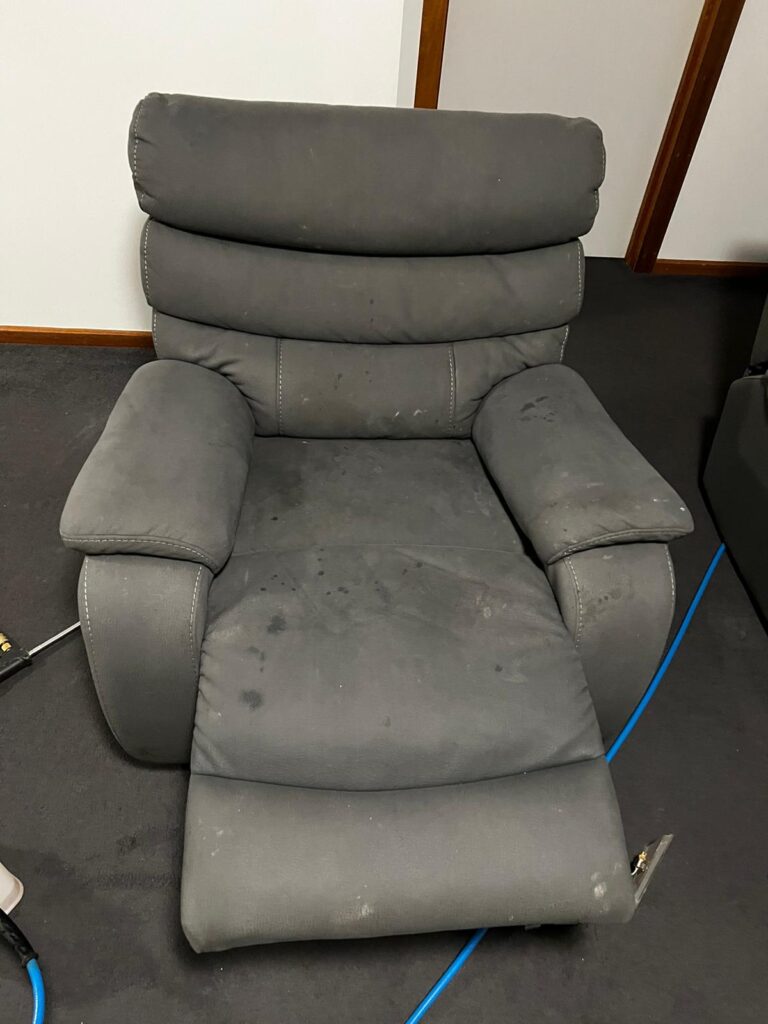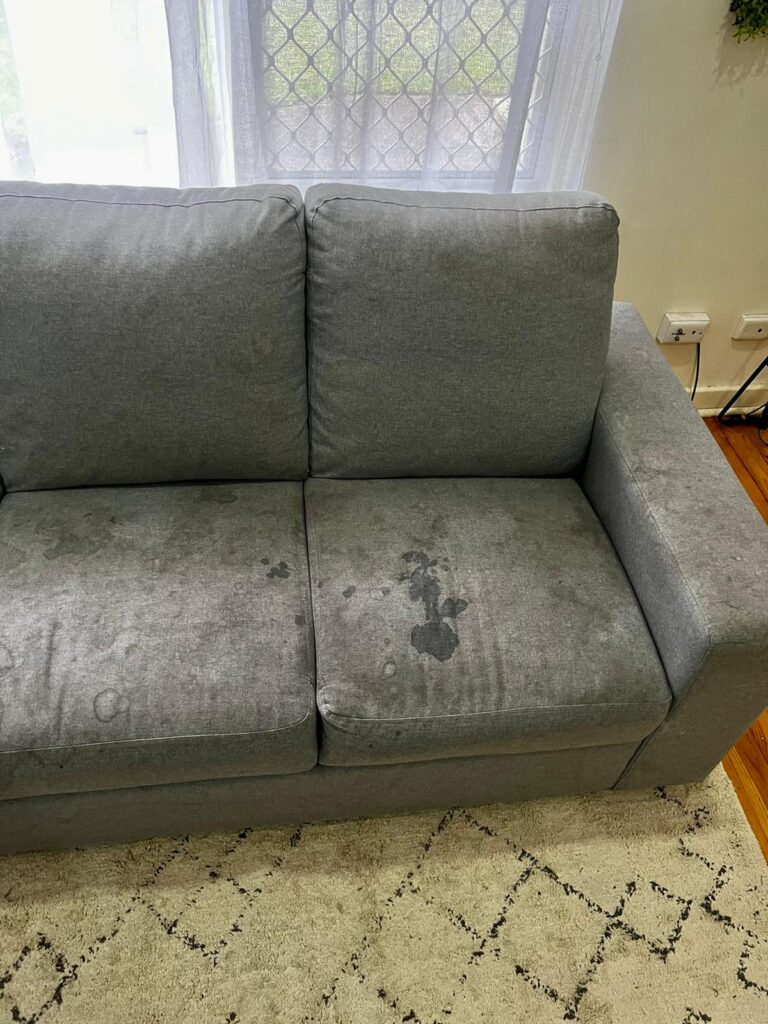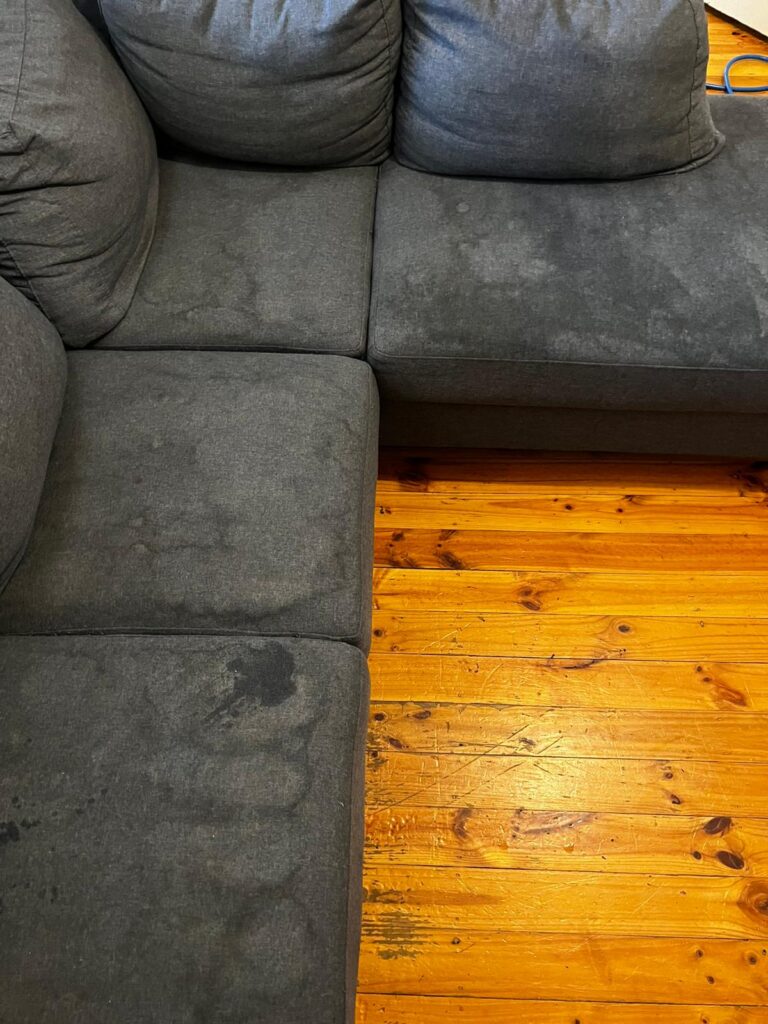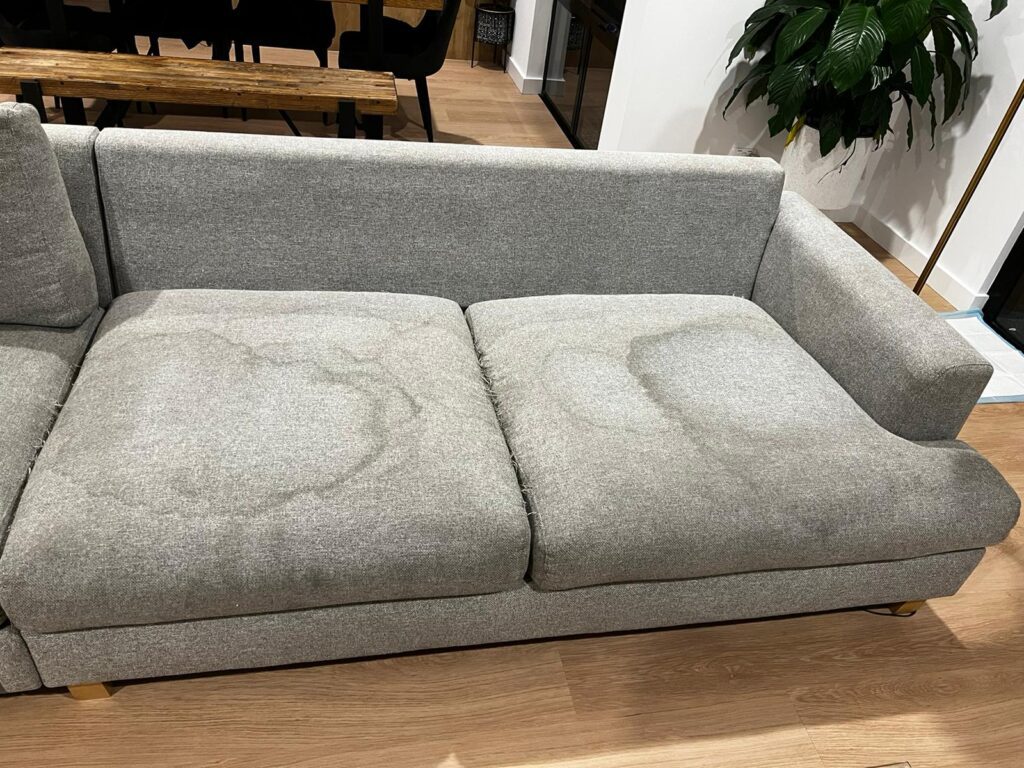
Quick answer: Water rings on couch cushions form when moisture spreads through the fabric, carries dissolved dirt and residue outwards, and leaves it behind at the edge as it dries. Spot cleaning one patch usually makes a bigger ring. The reliable fix is to clean the whole cushion panel evenly and extract the moisture well, which is what a professional sofa clean does.
Water rings are one of the most common reasons people book sofa cleaning in Melbourne. A glass of water, a wet dog, a leaking window or a well-meant attempt at spot cleaning, and suddenly there is a tide mark across the cushion that looks worse than the original spill. The good news is that most rings respond well to the right approach. The bad news is that the most obvious DIY fix tends to make them bigger.
Why do water stains appear on couch cushions?
A water ring is not really a stain from the water itself. It is what the water moves. Every fabric sofa holds a layer of body oil, dust, skin cells and old residue from previous cleaning products. When a patch gets wet, that material dissolves and travels outwards with the moisture. The middle of the patch dries first, the edge dries last, and the soil collects along that edge as a visible line.
Several things make rings worse:
- Soiled fabric. The dirtier the cushion, the more there is to move and the darker the ring.
- Residue from past products. Shampoos and sprays that were never rinsed out leave sticky residue that attracts dirt.
- Sensitive fibres. Natural fibres such as cotton, linen and viscose can brown when wet, a reaction called cellulosic browning.
- Slow drying. In a cold, closed Melbourne living room, moisture has longer to wick and spread.
- Hard water or tap water minerals. These can add to the mark as they dry.
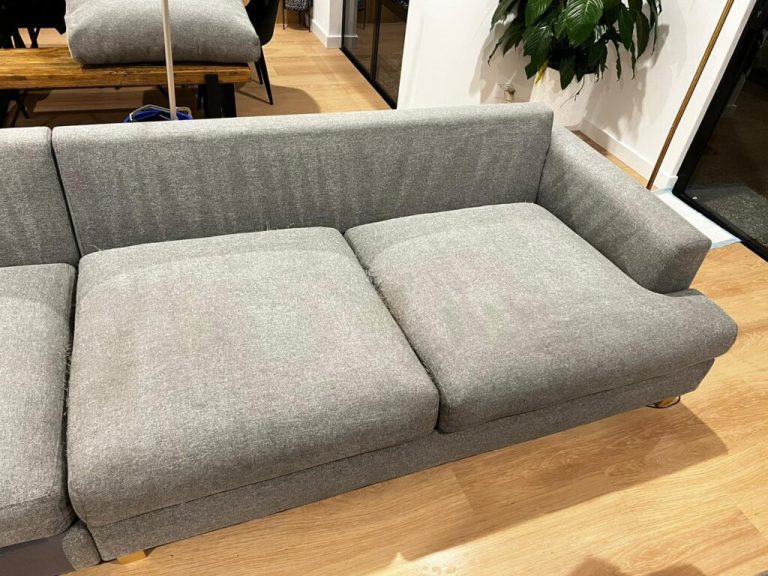
Why does spot cleaning make water rings worse?
When you dab at a ring with a damp cloth, you are adding more water to a small area. That water spreads, dissolves more soil, and dries with a new, bigger ring around the old one. Each attempt pushes the edge further out. This is also why a cushion often looks patchy after someone cleans one spill: the clean spot stands out against the rest of the slightly soiled fabric.
The fix is not to clean the ring. It is to clean the whole panel, edge to edge, so there is no boundary for soil to collect along, and then to remove as much moisture as possible so it dries quickly and evenly.
How do professionals remove water rings from a sofa?
- Identify the fabric. The technician checks the care code and tests a hidden area. Our guide to upholstery cleaning codes explains why this matters so much for ring-prone fabrics.
- Pre-treat the whole panel. Not just the ring. Treating the entire cushion face, seam to seam, avoids creating a new boundary.
- Use an acidic rinse where suitable. Browning and mineral marks often respond to a mild acidic rinse that neutralises the alkaline residue behind them.
- Extract thoroughly. Slow, overlapping passes with an upholstery tool pull out moisture rather than leaving it to wick.
- Speed the drying. Airflow from a fan or air mover helps the panel dry evenly, which stops rings reforming.
- Clean both sides where possible. If cushions are removable and reversible, cleaning both sides keeps them matching.
On water-sensitive fabrics, a low-moisture approach may be safer. Our comparison of couch steam cleaning vs dry cleaning explains when each method suits.
Can every water ring be removed?
Most rings caused by soil and residue come out well with a full-panel clean. Some situations have limits, and a good cleaner will tell you about them upfront:
| Cause of the mark | Usual outcome |
|---|---|
| Soil and residue ring on synthetic fabric | Usually removed well with a full-panel clean |
| Browning on natural fibres | Often improves significantly, sometimes needs more than one treatment |
| Dye that has bled or moved | Often permanent, because the colour itself has shifted |
| Ring from a leak with mould growth | Staining may remain; badly affected foam may need replacing |
| Fabric that has shrunk or puckered | Cleaning cannot reverse shrinkage |
FreshBreeze is honest about these limits before starting. If an area does not come up as expected after a clean, the free re-clean guarantee means it gets another go.
What causes water marks to come back after a clean?
If rings reappear after cleaning, the usual reasons are overwetting, poor extraction, or leftover detergent. Moisture that reaches deep into the foam can wick back up to the surface as it dries, bringing old soil with it. This is closely related to the way carpet stains reappear, explained in our post on why carpet stains keep coming back. Good extraction and quick drying are what prevent it. For drying expectations, see how long a couch takes to dry.
What should you do right now if your couch just got wet?
- Blot up as much liquid as possible with clean white towels, pressing firmly.
- Do not rub, scrub or add more water.
- Remove cushion covers only if the tag says they are removable for cleaning. Do not machine wash them, as shrinking is common.
- Get air moving with a fan, and use heating or a split system on a cold or humid day.
- If a leak or flood is the cause, fix the source first.
Resist the urge to hit a fresh water mark with a hair dryer. Fast heat on one spot dries the edge sharply and can set the ring more firmly than slow, even drying.
If water has come from a burst pipe or storm and the carpet is wet too, that is a different job. Flood damage restoration covers extraction and drying of carpet and underlay, with 24/7 emergency response.
Getting water rings removed from your couch in Melbourne
Send a photo of the marked cushions in daylight, plus the care tag if you can find it and your suburb. FreshBreeze will confirm a fixed per-seat price before starting, test the fabric, and clean full panels so rings do not simply move. Products are eco-friendly and safe for kids and pets.
To book professional sofa cleaning in Melbourne, including Sandringham and nearby bayside suburbs, text a photo to 0485 522 533 or call (03) 7067 9244. You can also send your details online.