Quick answer: In the first 24 hours, put safety first: stay away from water near power points or appliances and turn off electricity at the switchboard only if it is safe to do so. Stop the water source, photograph everything, contact your insurer, move furniture off the wet carpet and start removing water as quickly as possible. Carpet and underlay that are extracted and dried quickly have the best chance of being saved, so getting professional water damage drying in Melbourne started early matters.
A burst flexi hose, a leaking dishwasher, an overflowing bath or storm water coming under the door can soak a room of carpet in minutes. What you do over the next day has a big effect on whether the carpet can be dried and kept, or has to be pulled up and replaced. This is a practical checklist for those first 24 hours.
Is it safe to walk on wet carpet?
Water and electricity are a dangerous combination. Before you walk into a room with wet carpet, consider where the water has reached.
- Do not touch power points, power boards, appliances or light switches that are wet or in standing water.
- Turn off the power at the switchboard only if you can reach it safely without standing in water. If you cannot, stay out and call a licensed electrician or your electricity distributor.
- Watch for sagging ceilings if the leak came from above. Stay out from under any ceiling that is bulging or dripping.
- Treat floodwater as contaminated. Water from storms, overland flooding, overflowing drains or sewage can carry bacteria and chemicals. Avoid skin contact, wear gloves and boots, keep children and pets away, and wash hands thoroughly.
- Be careful of slips: wet carpet edges, tiles and timber become slippery.
In an emergency where there is a risk to life, call 000. For storm and flood help in Victoria, the VICSES can be contacted on 132 500.
What should you do in the first hour?
- Stop the water. Turn off the mains water tap if a pipe, hose or appliance is leaking. The meter and main tap are usually near the front boundary.
- Make the area safe. Deal with electrical risks as above.
- Photograph and video everything before moving anything: the water, the source, the wet carpet, damaged furniture and any visible water lines on walls.
- Contact your insurer to report the damage and ask what they need from you. Your policy decides what is covered, so check with them before throwing anything out.
- Call a plumber if the source needs repair.
What should you do in the first few hours?
- Lift furniture off the carpet. Timber and metal furniture legs can stain wet carpet with tannin or rust marks. Put foil or plastic blocks under legs if you cannot move them out.
- Move rugs, books, shoes and boxes out of the wet area. Rugs can bleed dye onto wet carpet.
- Remove standing water if it is clean water and safe to do so, using a wet vacuum, towels or a mop. Do not use a household vacuum.
- Start airflow. Open windows if the weather is dry and run fans if electrical outlets are dry and safe.
- Book professional water extraction. The longer water sits in the underlay, the harder it is to dry and the higher the risk of odour and mould.
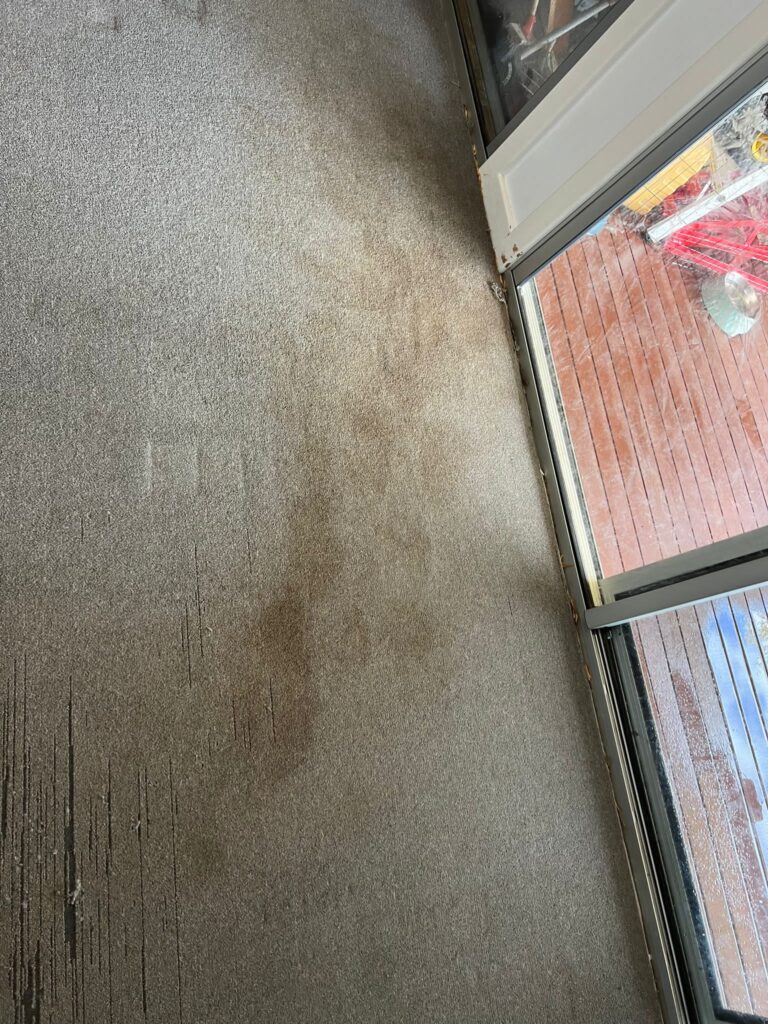
Why does speed matter so much with wet carpet?
Carpet itself can often cope with getting wet. The problem is what sits under it. Underlay acts like a sponge and holds a large amount of water, which then soaks into the floor below and the bottom of walls and skirting boards. In Melbourne’s colder months, a closed-up house dries very slowly on its own.
The longer that moisture stays trapped, the more likely you are to see musty odours, mould growth, delamination (where the carpet backing separates), shrinkage and stains wicking up from below. Fast water extraction and proper drying equipment give the best chance of avoiding these problems.
| Water source | Typical risk | General approach |
|---|---|---|
| Clean water (burst supply pipe, tap) | Lower, if dealt with quickly | Extract and dry; carpet often salvageable |
| Grey water (washing machine, dishwasher) | Moderate contamination | Extract, clean and dry; underlay may need replacing |
| Floodwater, storm water or sewage | High contamination | Carpet and underlay often need replacing; avoid contact |
Clean water left too long can also become contaminated, which is another reason not to wait.
What does professional flood drying involve?
A professional response focuses on removing as much water as possible, then drying what remains in a controlled way. Typical steps include:
- Assessment: checking where the water has spread, the type of water and whether carpet and underlay can be saved.
- Water extraction: powerful extraction removes water from the carpet and underlay.
- Lifting carpet and underlay: where needed, carpet is lifted so the underlay and floor underneath can dry. Badly soaked or contaminated underlay may need replacing, and you are told before work goes ahead.
- Drying equipment: dehumidifiers and air movers are set up to pull moisture out of the carpet, subfloor and room.
- Cleaning and deodorising: once dry, the carpet can be cleaned, and relaid or restretched where it has been lifted.
Keep the drying equipment running once it is set up, even if it is noisy, and keep windows closed while dehumidifiers are working unless you are told otherwise. Switching equipment off early is one of the most common reasons carpets end up with a musty smell.
What should you avoid doing?
- Do not use household electrical appliances in standing water.
- Do not walk back and forth across wet carpet more than necessary, as it can stretch and ripple.
- Do not lay rugs, towels or furniture back on damp carpet.
- Do not throw away damaged items before your insurer has had a chance to see them or your photos.
- Do not assume carpet that feels dry on top is dry underneath. The underlay often stays wet for much longer.
Whether your carpet can be kept depends on the water type, how long it was wet and the carpet’s construction. Our guide on whether water-damaged carpet can be saved goes through those factors. If the carpet dries but is left rippled, carpet restretching can usually fix it, and our carpet drying times guide explains why drying varies so much.
Getting emergency water damage help in Melbourne
FreshBreeze provides 24/7 emergency flood response across Melbourne, including bayside suburbs such as Sandringham, with water extraction, carpet and underlay lifting and drying, and dehumidifiers and air movers. Once the area is dry, carpet repair and restretching and carpet steam cleaning can finish the job.
For flood damage restoration in Melbourne, call (03) 7067 9244 or text photos of the wet area and your suburb to 0485 522 533. You can also contact us for non-urgent enquiries.