Quick answer: Microfibre and suede-look sofas watermark when moisture is applied unevenly or dries slowly, leaving a ring of dissolved soil at the edge. The fix is to clean whole panels evenly with controlled, low-moisture methods, then brush the nap while it dries. Check the care code first, avoid soaking spot cleans, and get a professional fabric test before any full clean.
Microfibre and suede-look fabrics are popular in Melbourne homes because they feel soft, resist some spills and handle pets better than many weaves. Their weakness is water. A splash of tap water, a damp cloth or the wrong spray can leave a tidemark that looks worse than the original stain. Professional sofa dry cleaning and upholstery cleaning in Melbourne uses a controlled approach designed to avoid exactly that.
What is microfibre and suede-look fabric?
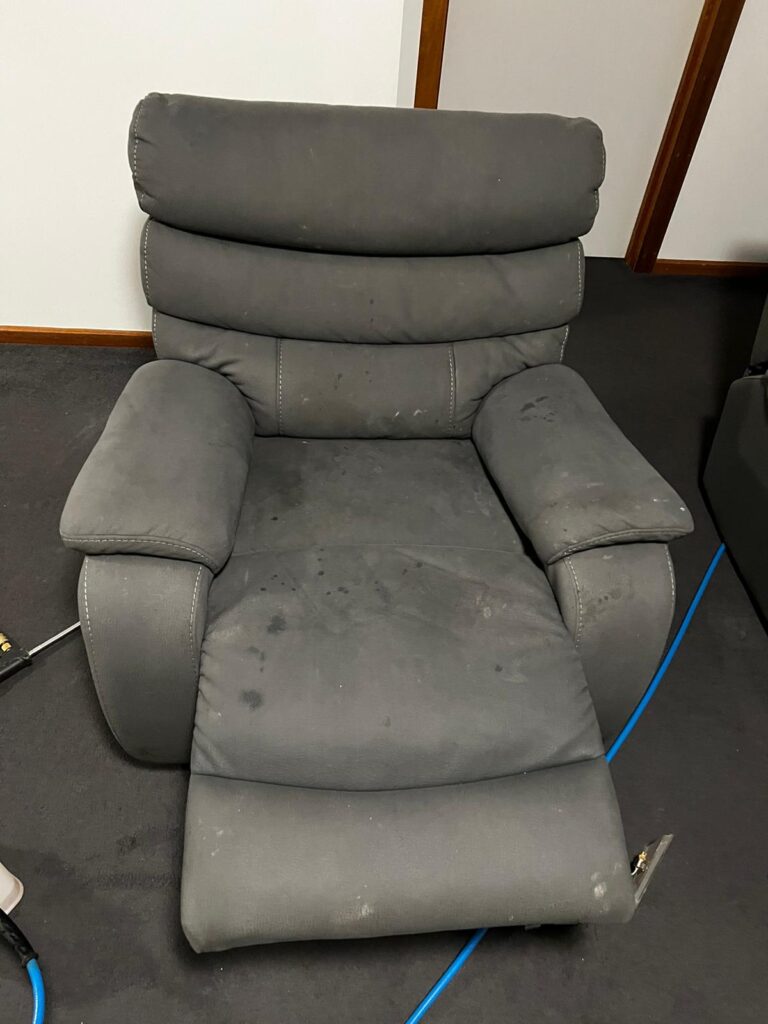
Microfibre is made from extremely fine synthetic fibres, usually polyester, packed tightly together. Suede-look or faux suede fabrics use similar fibres brushed to create a soft nap that imitates real suede. Both have a raised surface that changes shade depending on which way the fibres lie, which is why they show hand marks and pressure marks so easily.
Real suede is a leather product and needs a different approach entirely. If your couch is genuine leather or suede, look at our leather couch cleaning and conditioning service instead.
Why do microfibre sofas get water rings?
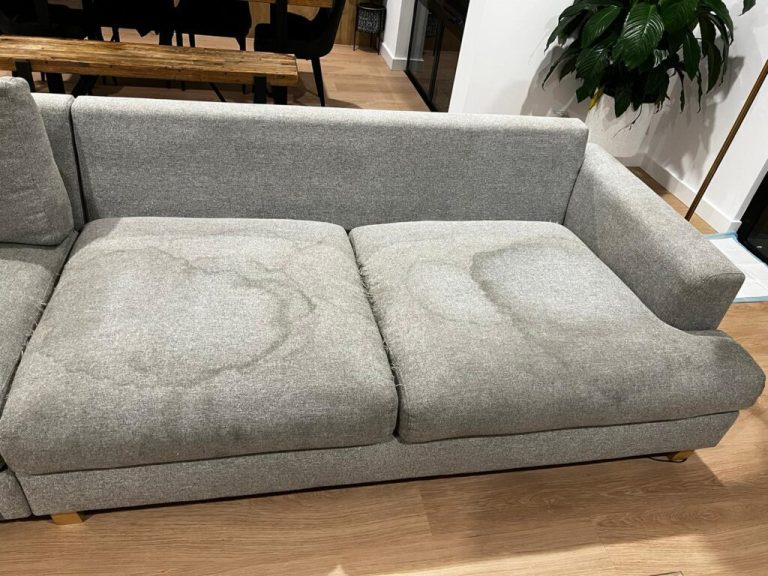
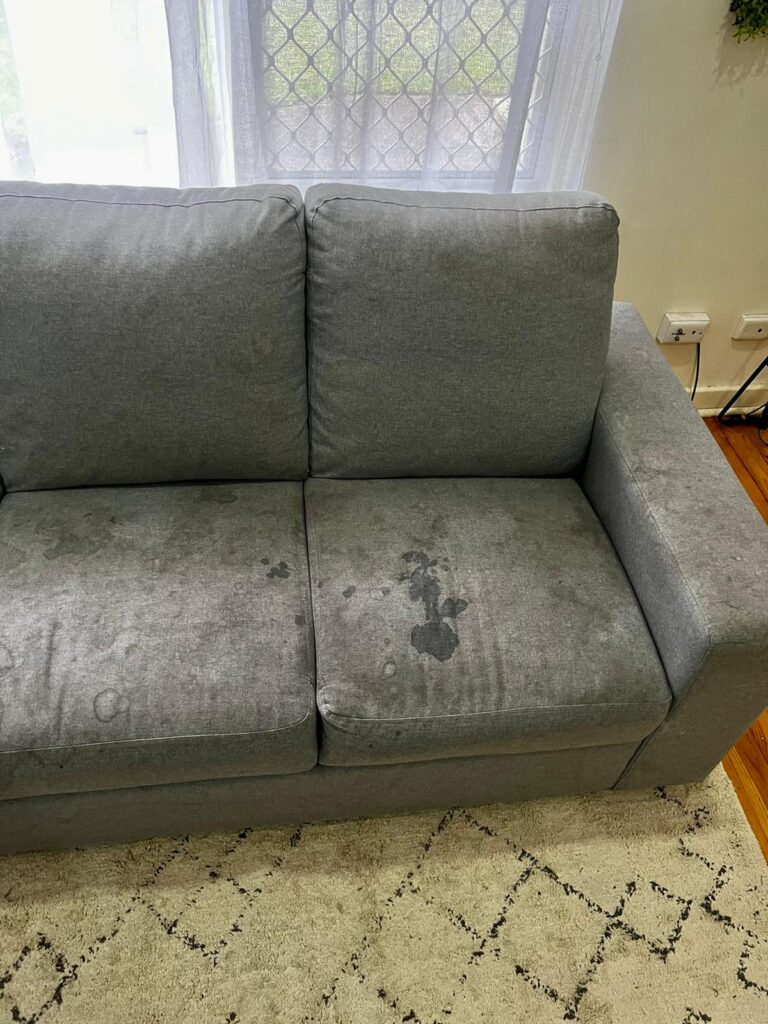
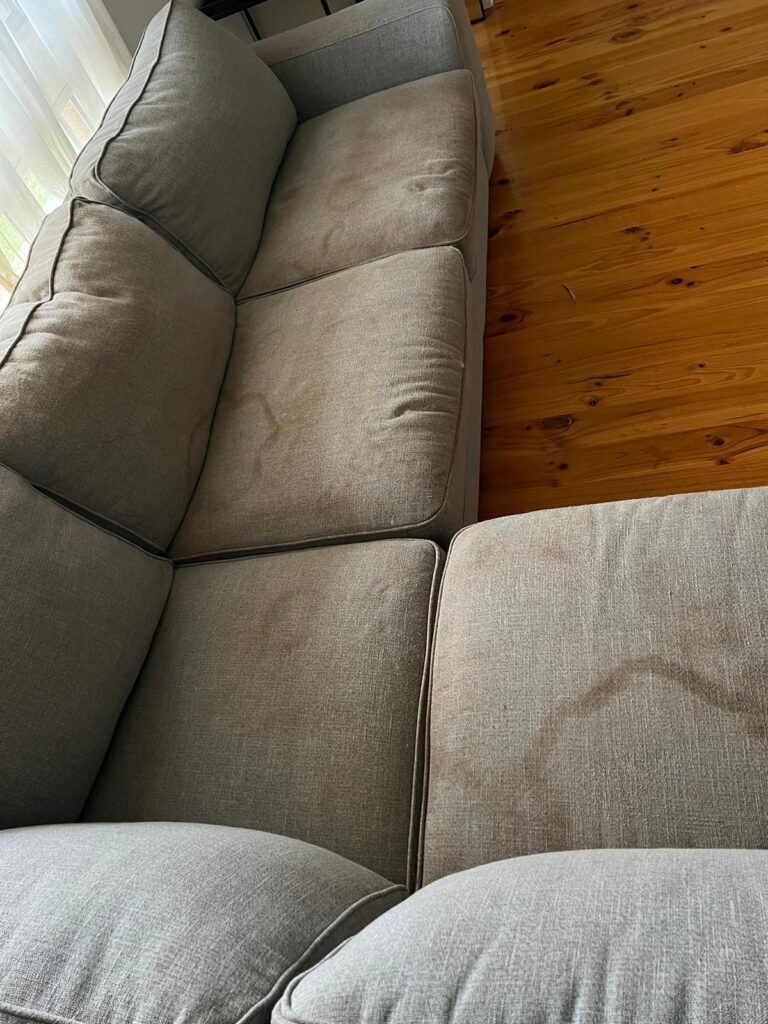
A water ring is not really a water stain. When you wet part of a cushion, the moisture dissolves dirt, body oil and any old cleaning residue in the fibres. As the patch dries, that moisture wicks to the edge of the wet area and evaporates there, leaving a concentrated line of soil behind. The middle looks cleaner and the edge looks darker.
Several things make it worse:
- Wetting a small spot rather than the whole panel.
- Using too much water, so it soaks into the foam and dries slowly.
- Hard tap water leaving mineral deposits.
- Old detergent residue from previous DIY cleaning.
- Cold, damp Melbourne weather and closed-up rooms that slow drying.
We cover the general problem in more depth in water rings on couch cushions and how pros remove them.
What do the cleaning codes mean for microfibre?
Most microfibre sofas have a care tag under a cushion or on the base. The code tells you what the manufacturer considers safe:
| Code | Meaning | What it means for microfibre |
|---|---|---|
| W | Water-based cleaning | Controlled moisture is acceptable, but even application still matters |
| S | Solvent-based cleaning only | Water is likely to mark; avoid DIY water cleaning |
| W/S | Water or solvent | Flexible, but test first |
| X | Vacuum or brush only | Leave wet cleaning to a professional assessment |
Many microfibre couches carry an S code, which is the main reason they mark so readily with water. The full breakdown is in our guide to upholstery cleaning codes.
How do you clean a fresh spill without making a ring?
If you have spilled something on a microfibre couch, act quickly but gently:
- Blot up as much liquid as you can with a dry white cloth or paper towel. Press, do not rub.
- Check the care code before adding anything.
- If the code allows water, lightly dampen a cloth and blot from the outside in, feathering the edges so there is no hard line.
- Blot dry with a fresh cloth and point a fan at the area.
- Once dry, brush the nap gently with a soft upholstery brush to even out the texture.
Pro tip: if a ring has already formed, stop spot treating. Repeated dabbing on the same patch only builds a bigger ring. The fix is usually an even clean across the whole cushion or panel.
How do professionals clean microfibre and suede-look sofas?
The process starts with an inspection and fabric test. That tells the technician whether the fabric tolerates water, whether dyes are stable, and how the nap reacts. From there:
- Dry soil removal. Thorough vacuuming lifts hair, crumbs and dust out of the nap and seams.
- Targeted pre-treatment. Greasy armrests, headrests and spills get a suitable spotter.
- Low-moisture cleaning. The fabric is cleaned with controlled moisture, panel by panel, so each section is treated evenly from seam to seam.
- Extraction and blotting. As much moisture as possible is removed immediately.
- Brushing and drying. The nap is groomed in one direction while damp, and airflow speeds drying so rings do not get a chance to form.
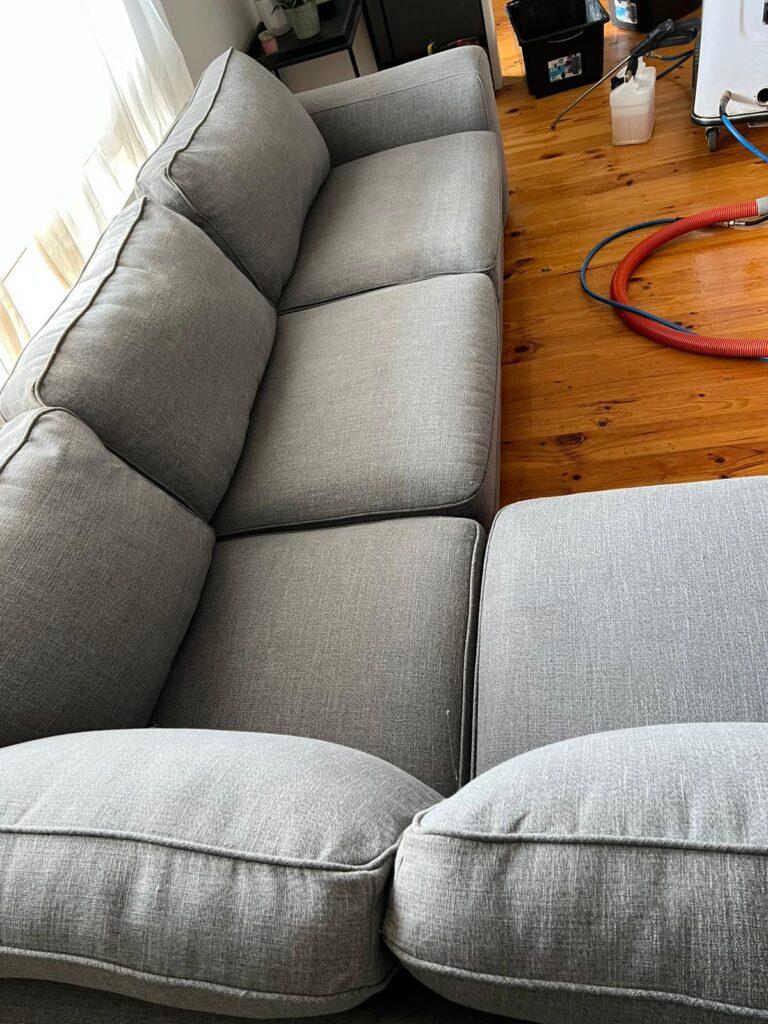
Where cushions are removable, both sides are cleaned so they match when flipped. If you are weighing up methods more generally, our article on couch steam cleaning vs dry cleaning explains when each is used.
What are the limits of cleaning microfibre?
Microfibre generally cleans well, but there are honest limits:
- Old watermarks usually improve with an even clean, but marks caused by mineral deposits or old residue may need more than one pass.
- Matted or crushed nap from years of sitting can be groomed, but the fibres will not always stand back up fully.
- Pilling and wear are physical damage, not dirt.
- Dye loss and sun fade are permanent.
- Grease left for a long time may lighten a lot without vanishing completely.
A good cleaner will point these out after the fabric test, before cleaning starts.
How do you look after microfibre between cleans?
- Vacuum weekly with a soft brush attachment, especially if you have pets.
- Brush the nap now and then to keep it even.
- Blot spills straight away and avoid soaking.
- Keep the couch out of strong afternoon sun.
- Rotate and flip cushions so wear stays even.
- Avoid household sprays that leave residue, which attracts more soil.
Pet owners will find more practical advice in our guide to removing pet hair from carpet and couches.
Getting your microfibre sofa cleaned in Melbourne
FreshBreeze cleans microfibre, suede-look and other delicate fabrics across Melbourne, including Armadale, Malvern and Toorak. We fabric-test first, use eco-friendly products that are safe for kids and pets, and every job is backed by our free re-clean guarantee.
To book microfibre and fabric couch cleaning, text a photo of your sofa, its care tag and any marks, plus your suburb, to 0485 522 533 or call (03) 7067 9244. We price per seat and confirm a fixed price before work starts. See our pricing page for how quotes work.