Quick answer: A modular or corner sofa is cleaned module by module, with each piece separated where possible so seams, joins and hidden edges get cleaned, not just the visible faces. The corner seat and chaise usually carry the heaviest soiling and need extra pre-treatment. Professionals also clean all cushions evenly so the modules still match when you put them back together.
Big modular lounges are now the default in a lot of Melbourne homes, and they collect more soil than a standard three-seater. More seats means more use, and the gaps between modules are where crumbs, pet hair and spills disappear. If you are looking at sofa cleaning in Melbourne for a modular or L-shaped lounge, here is what a professional should do differently and what to ask before booking.
Why are modular sofas harder to clean than a standard couch?
- More seams and joins. Each module has its own edges where soil and debris collect.
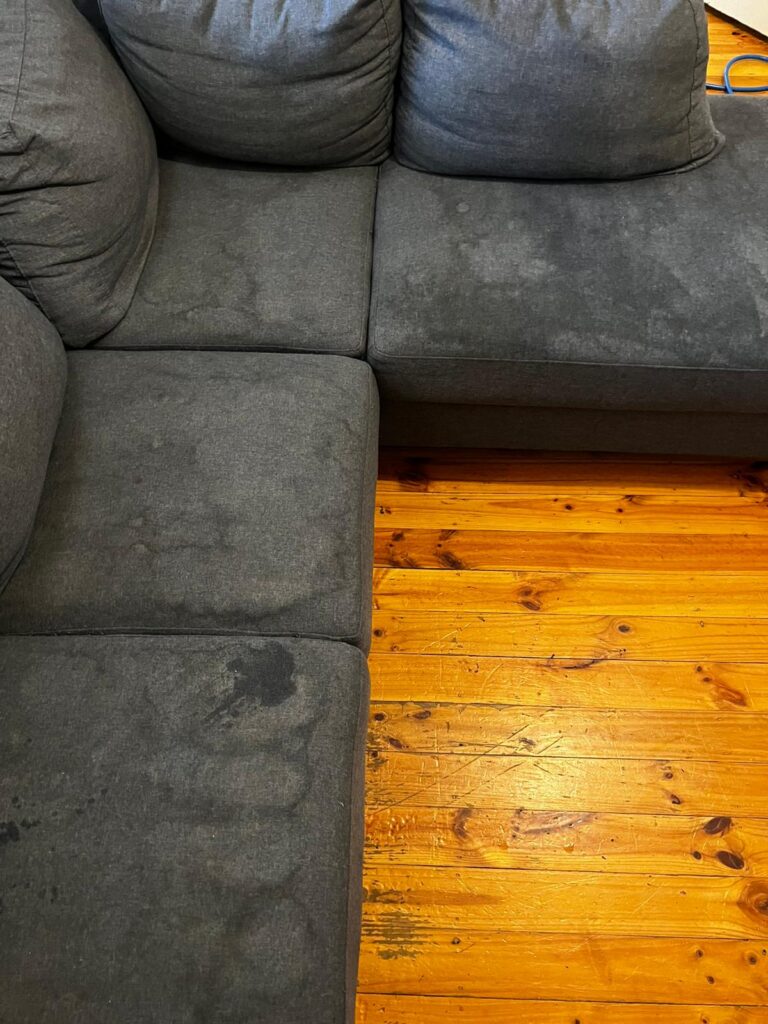
- Uneven use. The corner seat and chaise are usually the favourite spots, so they soil faster than the end modules.
- Hidden faces. The inside edges of modules, which face each other, are rarely vacuumed and can be surprisingly dirty.
- Size. More fabric means more drying time and more care to get an even result.
- Fixed vs loose cushions. Many modulars mix removable cushions with fixed backs, which need different handling.
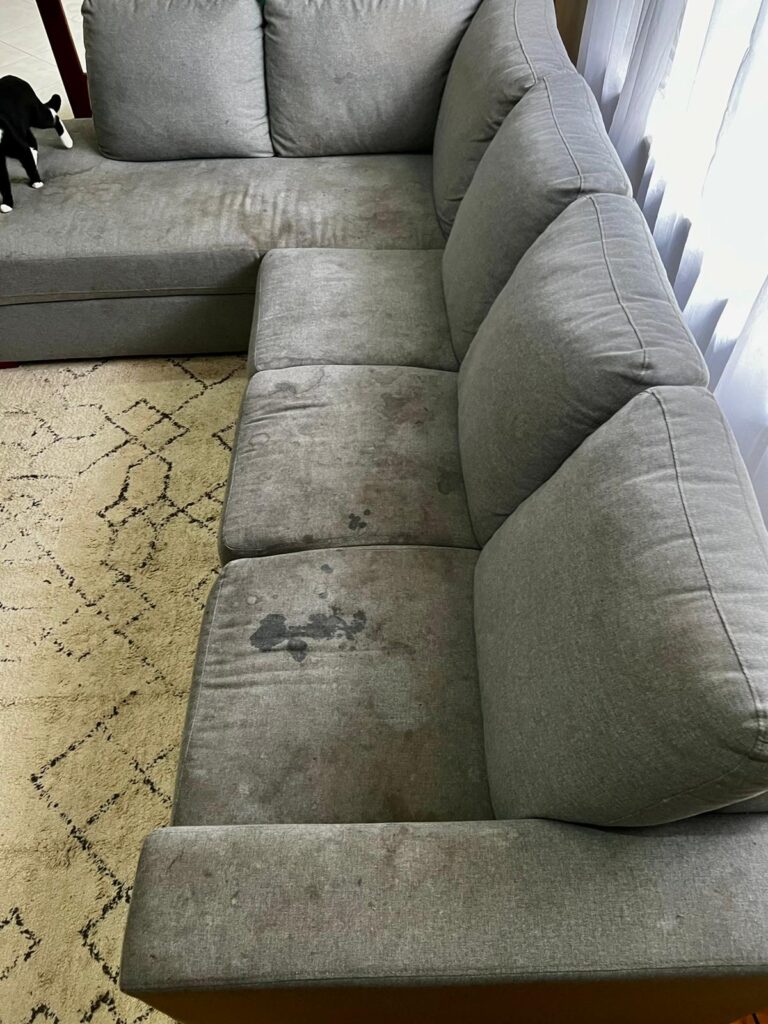
How do professionals clean a modular or corner sofa?
- Inspect each module. The technician checks the fabric code, condition and stains on every piece, including the chaise and corner unit.
- Fabric test. A hidden spot is tested for colourfastness and moisture sensitivity. See upholstery cleaning codes explained for what the tag tells you.
- Separate the modules. Where it is safe and the connectors allow, modules are pulled apart slightly so the joins and inner faces can be vacuumed and cleaned.
- Thorough dry vacuum. Crevices, seams and gaps under cushions are vacuumed out before any moisture goes on.
- Zone pre-treatment. Heavy-use seats, arms and headrests get extra attention. The chaise often needs treatment along its full length where legs rest.
- Rinse and extract evenly. Every module is cleaned to the same standard, so a heavily used corner seat does not end up a different shade from the ends.
- Cushions both sides. Removable cushions are cleaned on both sides so they can still be rotated.
- Dry and reassemble. Airflow is set up so the whole lounge dries evenly before modules are pushed back together.
Do all modules need to be cleaned, or just the dirty ones?
Clean them all. It is tempting to only do the corner and chaise where the marks are, but cleaned fabric looks noticeably brighter than uncleaned fabric. If you clean only some modules, the difference shows as soon as they sit side by side. The same principle applies to cushions: cleaning one face of a reversible cushion and not the other leaves you with cushions that do not match when flipped.
Uneven colour can also come from sun. A module that sits by a north-facing window may have faded compared with the others, and cleaning will not reverse that. A good cleaner points this out before starting.
Once the lounge is clean, rotating the modules every few months helps spread wear more evenly. If the corner seat is always the favourite, swapping cushions between seats where they are interchangeable stops one area flattening and soiling much faster than the rest, and keeps the whole lounge looking consistent between professional cleans.
How is a modular sofa priced?
Modulars are typically priced per seat, with the corner piece and chaise usually counted as seats. Ottomans are often a smaller add-on. Our guide to couch cleaning cost in Melbourne explains how seats are counted and what else affects the quote, without the guesswork. The simplest approach is to send a photo of the whole lounge so the pieces can be counted accurately.
| Module type | How it is usually counted | Typical cleaning focus |
|---|---|---|
| Standard seat module | One seat | Seat cushion, back and joins |
| Corner unit | One seat | Heavy-use seat and both back faces |
| Chaise | One or two seats depending on length | Full length, especially where legs rest |
| End module with arm | One seat | Arm top and front, often greasy |
| Ottoman | Small add-on | Top surface and edges |
What stains are common on corner sofas?
Corner lounges are family central, so expect a mix: food and drink, body oil on arms and headrests, pet hair and accidents, and kids’ marks. The usual suspects and where to read more:
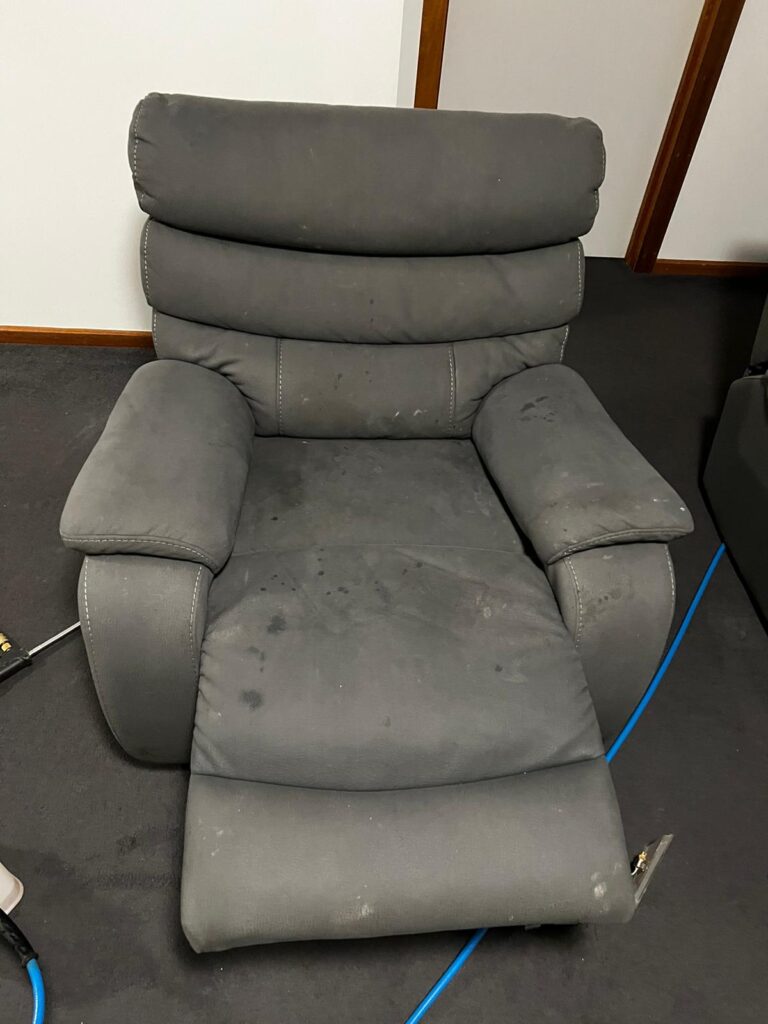
- Dark arms and headrests: body oil build-up, covered in greasy headrests and arm marks.
- Pet urine on a chaise or corner seat: needs enzyme treatment, covered in dog or cat urine on the couch.
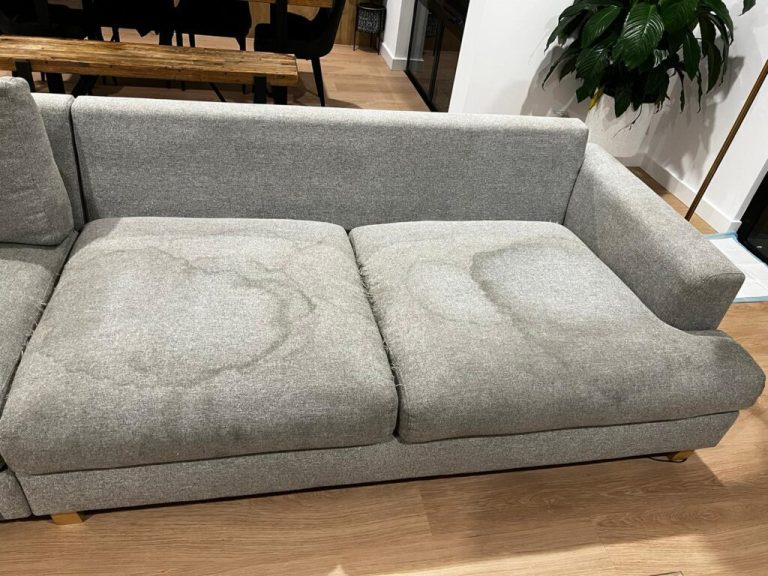
- Water rings from drinks or damp towels on the chaise.
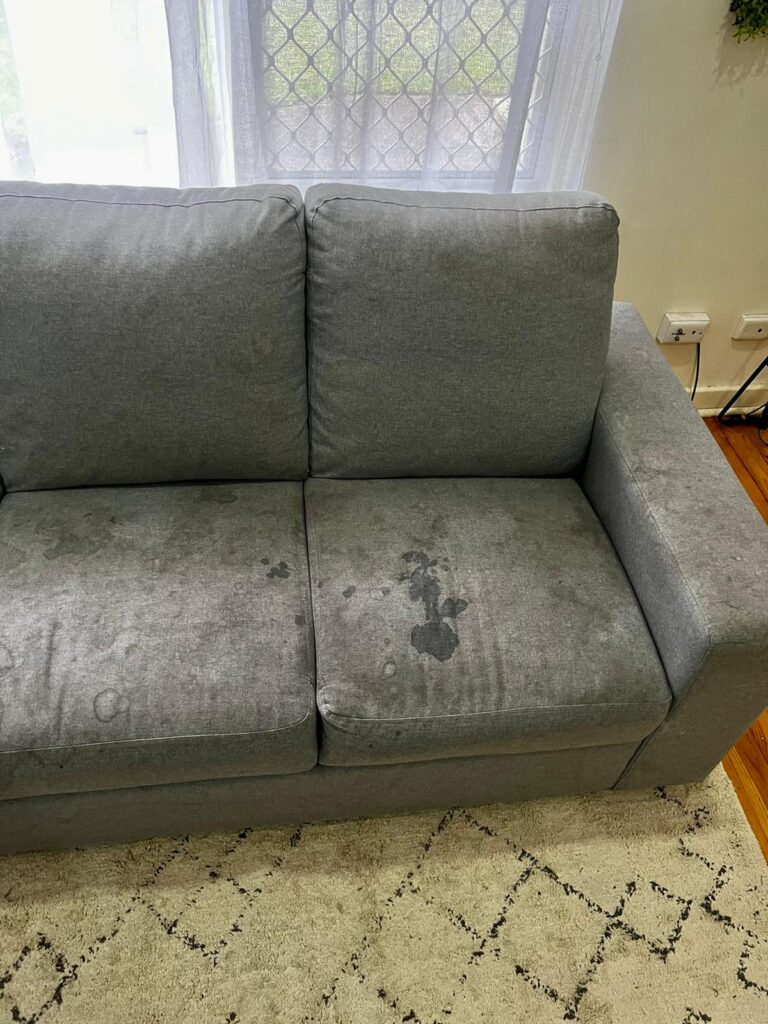
- Food and drink spills that have run down between modules.
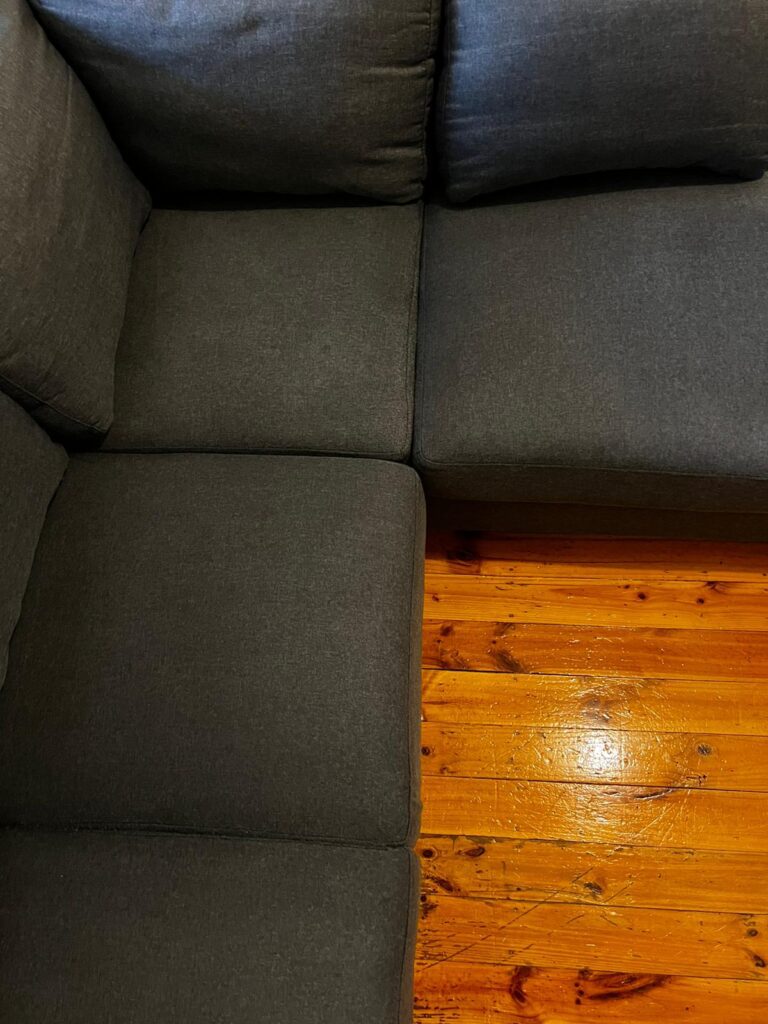
How long does a big modular take to dry?
Longer than a small couch, simply because there is more fabric and more cushion foam. With thorough extraction and good airflow, it is usually dry to the touch within hours rather than days. In a cold, closed room during a Melbourne winter, allow more time. A fan pointed along the length of the lounge and a heater or split system running help a lot.
Leave a small gap between modules while they dry. Pushing damp modules tightly together traps moisture in the joins and slows drying along the seams.
Getting your modular or corner sofa cleaned in Melbourne
Send a photo of the whole lounge from the front, a close-up of the worst area, and your suburb. FreshBreeze will count the seats, confirm a fixed price before starting, and clean every module to the same standard with eco-friendly products safe for kids and pets. If any area is not right, the free re-clean guarantee covers it.
Many people pair a big lounge with the carpet or rug it sits on. Ask about rug cleaning or carpet in the same visit for a bundle discount. To book professional modular sofa cleaning in Toorak or anywhere in Melbourne, text a photo to 0485 522 533 or call (03) 7067 9244.