Quick answer: Most fabric dining chair seats can be cleaned well with a fabric test, a targeted pre-treatment for food and grease, and a controlled low-moisture or hot-water extraction clean. Blot fresh spills, never scrub, and avoid soaking the foam. Old grease, dye transfer and sun fade may only partly improve, so a good cleaner will tell you what to expect before starting.
Dining chairs get a harder life than the lounge suite. They take food, red wine, cordial, greasy fingers and the backs of jeans every day, and they are often light-coloured fabric chosen to match a table rather than to hide marks. If yours are looking tired, professional upholstery fabric cleaning services in Melbourne can usually bring them back for far less fuss than recovering or replacing them.
This guide covers what actually stains dining chairs, how to deal with spills at home, what a professional clean involves, and the honest limits.
Why do fabric dining chairs stain so quickly?
A dining seat sits right under the plate. Crumbs, sauces and drips land on it at every meal, and because people sit down straight after cooking or eating, oils from hands and clothing get pressed into the weave. The front edge of the seat and the top of the backrest usually darken first.
Common culprits include:
- Food oils and sauces such as butter, pasta sauce, curry and salad dressing, which leave a dull, darker patch that attracts more dirt.
- Drinks like coffee, tea, juice and red wine, which carry tannins and dyes.
- Body oils on the backrest where heads and shoulders rest, the same problem covered in our guide to greasy headrests and arm marks on fabric sofas.
- Denim dye transfer on pale seats, which can be stubborn.
- Kids. Yoghurt, crayon, texta and milk all turn up on dining seats in family homes.
What should you do when food or drink hits the seat?
The first five minutes matter more than any product you buy. Lift off solids with a spoon or the edge of a card, then blot with a clean white cloth or paper towel, pressing rather than rubbing. Rubbing spreads the stain and roughs up the fibres so the patch looks fuzzy even after it is clean.
- Scrape off anything solid.
- Blot from the outside of the spill inwards.
- Dampen a cloth with cool water and blot again. Avoid hot water on protein spills like milk or egg.
- Blot dry and let the seat air dry with good ventilation.
Before using any upholstery spray, check the care tag under the seat. Many dining chairs carry a cleaning code, and our explainer on upholstery cleaning codes (W, S, W/S and X) tells you which ones tolerate water and which need solvent only. Using the wrong method is the main cause of rings and bleeding colour.
Pro tip: if a damp patch dries with a tidemark, do not keep adding water to that one spot. Rings form at the edge of wet fabric, so the fix is usually cleaning the whole seat panel evenly, not spot treating harder.
Which dining chair fabrics are hardest to clean?
Fabric type changes both the method and the likely result. Here is a quick comparison of what we commonly see on dining chairs.
| Fabric | How it behaves | What to watch for |
|---|---|---|
| Polyester and blends | Generally cleans well and tolerates controlled moisture | Oily stains can need a degreasing pre-treatment |
| Linen and cotton | Breathable, but marks easily | Shrinkage, water rings and colour bleed if over-wetted |
| Velvet | Looks great, shows every press and drip | Pile crush; needs grooming after cleaning |
| Microfibre and suede-look | Repels some spills, but watermarks readily | Usually suits a low-moisture approach; see our microfibre and suede-look sofa cleaning guide |
| Leather and faux leather | Wipes clean but dries out and cracks | Needs a pH-balanced cleaner and conditioning, not steam |
If your dining chairs are real leather, the right service is leather cleaning and conditioning rather than a fabric clean. The same pH-balanced approach used on leather lounges applies to leather seats.
What does a professional dining chair clean involve?
A professional clean follows the same three steps we use on couches: inspect and test, treat and clean, then dry and walk through the result with you.
- Inspection and fabric test. The technician checks the fabric, the care code and the stains, and tests a hidden area for colour fastness and shrinkage risk.
- Dry soil removal. Vacuuming lifts crumbs and grit out of the seams and piping, where they otherwise turn to mud during cleaning.
- Pre-treatment. Food grease, drink stains and body oils each get a suitable spotter, given time to work.
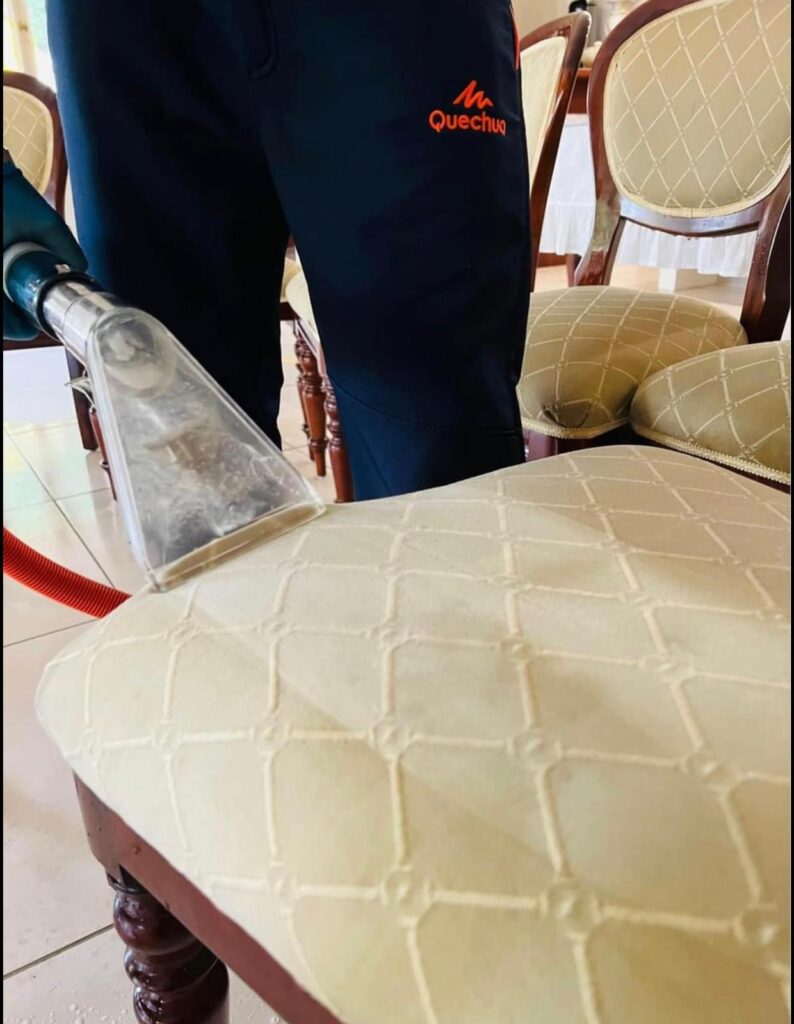
- Cleaning. Depending on the fabric, that is a controlled hot-water extraction with an upholstery tool or a low-moisture clean for sensitive fabrics.
- Drying and grooming. The fabric is groomed so the pile sits evenly, and airflow helps it dry faster.
Dining chairs are usually quick to clean because the seats are small and flat. The fiddly parts are piping, buttons and the join between fabric and timber, where cleaning solution must not run onto polished or oiled wood. A careful technician keeps the tool tight to the fabric and wipes the frame as they go.
Can every stain on a dining chair be removed?
No, and anyone who promises otherwise is guessing. Fresh food and drink spills usually respond well. Older stains are less predictable. Here are the honest limits:
- Old grease that has oxidised over months can lighten a lot but may leave a faint shadow.
- Bleach and cleaning-product damage has removed the colour, so there is nothing left to clean back.
- Sun fade on chairs near a north-facing window is permanent dye loss.
- Dye transfer from denim or a coloured cushion sometimes improves only partly.
- Foam that has soaked up a large spill, such as milk or urine, may hold odour that surface cleaning cannot fully reach.
The fabric test and inspection are where these limits get discussed. You should know before the clean starts whether a mark is likely to come out, lighten, or stay.
How do you keep dining chairs cleaner for longer?
A little routine care goes a long way, especially on pale fabrics:
- Vacuum the seats with an upholstery brush every week or two, paying attention to the seam at the back of the seat.
- Deal with spills straight away using the blotting method above.
- Rotate chairs around the table so the same two do not take all the wear.
- Keep chairs out of direct afternoon sun if you can, or use sheer curtains.
- For households with young children, consider washable seat covers for everyday meals.
Under the table, spilled food also ends up in the floor covering. If you have a rug under the dining setting, our on-site rug cleaning service is worth pairing with the chair clean.
Getting dining chairs cleaned in Melbourne
FreshBreeze cleans dining chairs alongside couches, ottomans and other fabric furniture across Melbourne, from Malvern to the bayside suburbs. Our products are eco-friendly and safe for kids and pets, and every job is covered by our free re-clean guarantee. Pricing is by quote, and many customers bundle chairs with their lounge for a better rate.
To book professional dining chair and upholstery cleaning, text a photo of your chairs and your suburb to 0485 522 533 or call (03) 7067 9244. You can also send details through our contact page and we will confirm a fixed price before any work starts.